




|
Quantity
|
Out of stock
|
||
|
|
|||
|
|
|||
CS2 hits the CPU limit before the GPU limit. In TechPowerUp's 1080p test with an RTX 5090, a Core Ultra 5 245K delivers 501 FPS and a Ryzen 7 9800X3D 681. The graphics card matters at maximum settings: there an RTX 4060 gets 220 FPS and an RTX 5070 430. That is why this selection is filtered by both: CPUs from the Core i5-14400F and Ryzen 5 7500F up, and graphics cards from the RTX 4060 to the RTX 5070 Ti and Radeon RX 9070 XT.
- Check your monitor's refresh rate: 144, 240, 360 Hz or higher.
- Pick a CPU that keeps average FPS well above that rate (see the table).
- Choose the graphics card for your resolution and settings.
- Before your first FACEIT match, enable TPM 2.0, Secure Boot and IOMMU in BIOS and make sure you run Windows 11.
Refresh rate and frame time
A 240 Hz monitor refreshes every 4.2 ms, a 360 Hz one every 2.8 ms. Average FPS should stay above the refresh rate with headroom: frames drop most in firefights, smokes and molotovs.
| Monitor | Frame time | Average FPS target | CPU | Graphics card |
|---|---|---|---|---|
| 144 Hz | 6.9 ms | 200+ | Core i5-14400F, Ryzen 5 7500F | RTX 4060, RTX 5060 |
| 240 Hz | 4.2 ms | 300+ | Core i5-14600K, Core Ultra 5 250KF Plus, Ryzen 7 7700 | RTX 5060, RTX 5060 Ti |
| 360 Hz | 2.8 ms | 450+ | Core i7-14700K, Core Ultra 7 270K Plus, Ryzen 7 7800X3D | RTX 5060 Ti 16 GB, RTX 5070 |
| 400–600 Hz | 2.5–1.7 ms | 550+ | Ryzen 7 9800X3D, Ryzen 9 9950X3D | RTX 5070, RTX 5070 Ti |
Targets are for low and medium settings. According to ProSettings (951 pro players, November 2026), 30% of pros use 240 Hz, 26% use 360 Hz and one in five already plays at 400–600 Hz.
The CPU sets the FPS ceiling
Ryzen 9 9950X3D687,2
Ryzen 7 9800X3D681,3
Ryzen 7 9700X665,5
Ryzen 7 7800X3D657,6
Ryzen 7 7700628,1
Core Ultra 9 285K599,6
Core i9-14900K597,1
Core Ultra 7 270K Plus594,6
Core i7-14700K580,5
Core Ultra 5 250K Plus580,2
Core Ultra 7 265K562,9
Core Ultra 5 245K500,5
Source: TechPowerUp, Ryzen 7 7700X3D and Core Ultra 5 250K Plus reviews (2026). Dark bars are Ryzen CPUs with 3D V-Cache. KF and F versions only lack integrated graphics and perform the same in games.
3D V-Cache helps less in CS2 than elsewhere: the Ryzen 7 9800X3D is 17% faster than the 9700X on average across games but only 2% faster in CS2. More in our 3D cache article. On the Intel side, the Core Ultra 5 245KF is the slowest CPU here at 501 FPS, 14% behind the 250K Plus. TechSpot measured the Ryzen 5 7500F 22–28% ahead of the Core i5-12400F in CS2.
Graphics cards at maximum settings
RTX 5070 Ti505,3
RTX 5070429,8
RTX 4070343
RTX 5060 Ti 8 GB310,9
RTX 5060 Ti 16 GB303,7
RTX 5060279
RTX 4060 Ti 8 GB257,5
RTX 4060 Ti 16 GB256,6
RTX 4060219,7
RX 9060 XT 16 GB209,7
Source: TechPowerUp, RTX 5070 Founders Edition and RTX 5050 reviews (2025), Ryzen 7 9800X3D test system.
At 1440p: RTX 4060 — 143 FPS, RTX 5060 — 189, RTX 5060 Ti — 204–205, RTX 5070 — 295, RTX 5070 Ti — 360. CS2 has no DLSS or frame generation, only FSR 1 upscaling, so the FPS counter shows real frames. For RAM, 32 GB in two modules is the standard here; a PCIe 4.0 NVMe SSD is enough.
FACEIT requirements in 2026
| Requirement | Where to enable | Status |
|---|---|---|
| Windows 11 | Windows Update | Required since 14.10.2026 |
| TPM 2.0 | BIOS: Intel PTT or AMD fTPM | Required |
| Secure Boot | BIOS, Boot or Security section; GPT disk | Required |
| IOMMU | BIOS: Intel VT-d or AMD IOMMU (AMD-Vi) | Rolling out in waves; since August 2025 for 3000+ ELO |
| VBS | Device security → Core isolation; check in msinfo32 | Together with IOMMU |
All CPUs in this selection have built-in TPM 2.0 and support Windows 11. Details in the FACEIT help center. To cut input lag, enable NVIDIA Reflex or AMD Anti-Lag 2 in CS2's video settings; Anti-Lag 2 is built into the game and works on Radeon RX 5000 and newer.
What is in this selection
Builds that match both the CPU and the graphics card filter: Intel Core i5-14400F to Core i9-14900K, Core Ultra 5 225F to Core Ultra 9 285K, Ryzen 5 7500F to Ryzen 9 9950X3D, with GeForce RTX 4060 to RTX 5070 Ti, Radeon RX 9060 XT 16 GB or RX 9070 XT. Every PC passes a stress test of at least 4 hours in AIDA64 and FurMark and comes with a 2-year warranty. Nova Poshta delivers in 1–3 days; pickup in Petropavlivska Borshchahivka (Kyiv) lets you test the PC before paying. Installments are available through PrivatBank and PUMB (gaming PCs on credit).
More selections
Questions before buying a CS2 PC
What PC do I need for CS2?
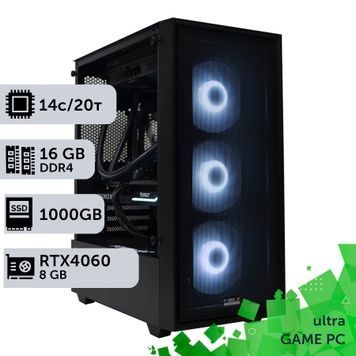
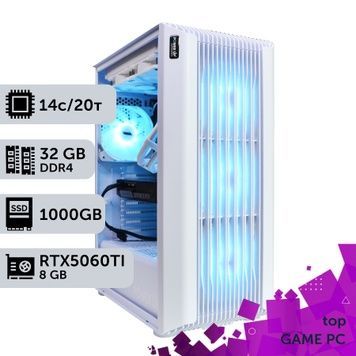
For a 144 Hz monitor: a Core i5-14400F or Ryzen 5 7500F, an RTX 4060 or RTX 5060, 16–32 GB of RAM and a 512 GB+ SSD. For 240–360 Hz: a Core i5-14600K, Core i7-14700K, Ryzen 7 7700 or 7800X3D with an RTX 5060 Ti or RTX 5070 and 32 GB. For 400–600 Hz: a Ryzen 7 9800X3D with an RTX 5070 Ti. Valve's minimum: 4 threads, 8 GB of RAM, a DirectX 11 card with 1 GB and 85 GB of storage.
How many FPS does the RTX 4060 get in CS2?
In TechPowerUp's test at maximum settings with a Ryzen 7 9800X3D: 220 FPS at 1080p and 143 FPS at 1440p. Lower settings give more frames because the CPU becomes the limit.
Do I need an X3D CPU for CS2?
Not necessarily. In CS2 the Ryzen 7 9800X3D is 2% faster than the Ryzen 7 9700X, and the 7800X3D is 5% faster than the Ryzen 7 7700 (TechPowerUp). Across games the gap is 12–17%, so X3D pays off for 400–600 Hz monitors and if you play more than CS2.
Is 16 GB of RAM enough for CS2?
For the game itself, yes: Valve lists 8 GB. With Discord, a browser, Steam and the FACEIT client running, 16 GB fills up, so most builds in this selection have 32 GB in two modules.
Is 8 GB of VRAM enough for CS2?
Yes. The RTX 5060 Ti 8 GB and 16 GB deliver the same result in CS2 (311 and 304 FPS at 1080p, maximum settings). 16 GB matters in heavy single-player games.
Can I play on FACEIT with Windows 10?
No. Since 14 October 2026 FACEIT requires Windows 11. TPM 2.0 and Secure Boot are also mandatory, while IOMMU and VBS are being enforced in waves, starting with high-ELO players.