Key Takeaways (TL;DR):
- In 2026, a trade-in is the most effective way to upgrade, saving up to 40% on the cost of a new PC.
- The key to a powerful build is balance. There's no point in pairing a top-tier processor with a mid-range graphics card.
- 32 GB of DDR5 RAM with speeds from 6000 MHz and graphics cards with 16 GB of VRAM have become the standard for 2K and 4K gaming.
- The valuation of an old PC considers not only the component models but also their condition, warranty status, and overall market liquidity.
What is Trade-in and Why is it More Relevant Than Ever in 2026?
The Trade-in program is a system where you turn in your old computer (or its individual components) as a credit towards the cost of a new one. It's similar to trading in a car at a dealership: you get rid of an old asset and immediately receive a discount on a new one. In the reality of 2026, when the technological leap is particularly noticeable, this approach becomes extremely pragmatic. Hardware that is 3-4 years old, such as RTX 3000 series graphics cards or Ryzen 5000 processors, is rapidly losing value on the secondary market due to the release of new generations with radically improved performance.
The main benefit lies in speed and convenience. Trying to sell an old PC part-by-part on online marketplaces is a lottery. You'll have to spend weeks taking photos of each component, writing descriptions, and communicating with dozens of potential buyers, most of whom are not serious. With a trade-in, you resolve this issue in a single visit or shipment. Engineers conduct diagnostics, provide an appraised value, and this amount is immediately deducted from the price of your new build.
This service is especially important in the context of new technologies. Games in 2026 actively use next-generation hardware-accelerated Ray Tracing and DLSS 4 intelligent anti-aliasing, which only work at full capacity on RTX 50-series cards. Your old RTX 3060 might still be decent, but it won't provide the same level of performance and visual quality. Furthermore, new platforms require new standards: motherboards with PCIe 5.0 support, DDR5 memory, and more powerful power supplies. By the way, for modern systems, a power supply with a certification of at least 80+ Gold is highly recommended to ensure stability and energy efficiency. A trade-in allows you to make this comprehensive transition smoothly, without leaving you with incompatible old parts on your hands.
| Component | Price in 2023 (UAH) | Appraised Trade-in Value in 2026 (UAH) | Value Loss |
|---|---|---|---|
| RTX 4070 Graphics Card | ~28,000 | ~9,000 - 11,000 | ~65% |
| Core i5-13600K Processor | ~13,000 | ~4,500 - 5,500 | ~62% |
| 32 GB DDR4 3600MHz | ~4,000 | ~1,000 - 1,500 | ~70% |
How Much VRAM is Really Needed for 4K Gaming in 2026?
The question of video memory (VRAM) capacity has become one of the most pressing issues in recent years. As monitor resolutions and texture quality in games increase, VRAM requirements are growing exponentially. While 8 GB was considered sufficient a couple of years ago, in 2026 it is the absolute minimum even for Full HD. When choosing a new graphics card, especially paired with a powerful Intel Core processor or AMD Ryzen, VRAM capacity becomes a critically important parameter that directly affects the frame rate (FPS) and the stability of the gameplay.
When a game runs out of VRAM, it starts offloading some data to the much slower system RAM. This leads to sharp drops in FPS, freezes, and 'stutters', making the game uncomfortable to play, even if the graphics chip itself is powerful enough. Modern titles with highly detailed textures, ray tracing, and high resolutions are particularly 'hungry' for VRAM.
Let's break down the current VRAM requirements for 2026:
- Full HD (1920x1080): To play comfortably at maximum settings at this resolution today, 12 GB of VRAM is required. Graphics cards like the RTX 5060 with 12 GB of VRAM are an excellent starting point. 8 GB may already be insufficient in the most demanding new releases, forcing you to lower texture quality.
- Quad HD (2560x1440): This is the new 'mainstream' gaming standard. Here, the bar is raised to 16 GB. Games like Alan Wake 2 or the upcoming GTA VI with ray tracing enabled can easily consume 14-15 GB of VRAM in 2K. A card like the RTX 5070 with 16 GB on board is the optimal choice for this resolution.
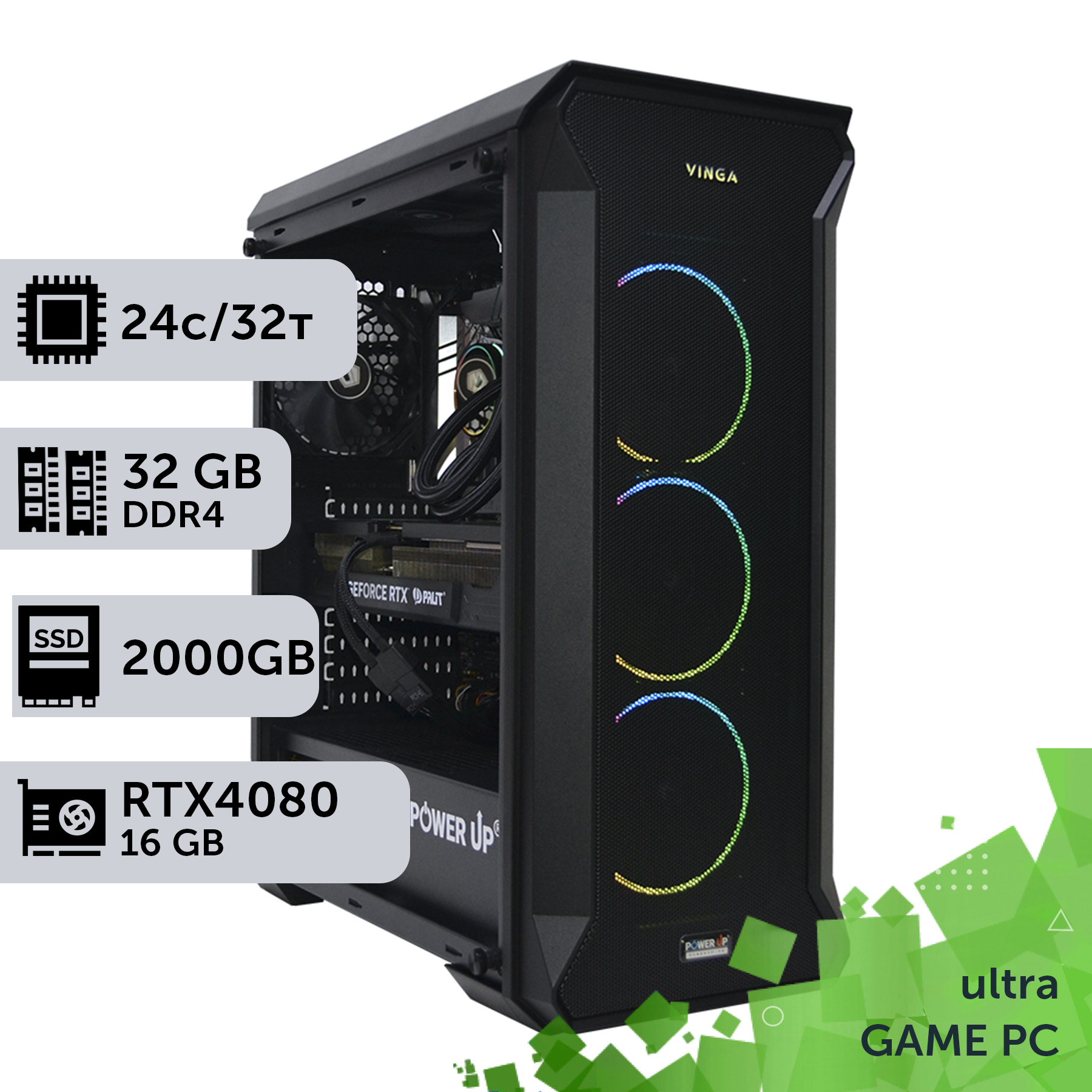
- Ultra HD (3840x2160 or 4K): No-compromise 4K gaming demands the maximum amount of VRAM. Here, 20-24 GB has become the de facto standard. Top-tier solutions like the RTX 5080 (20 GB) and RTX 5090 (24 GB) are designed for such tasks. Buying a card with 16 GB for 4K is a compromise that will force you to lower settings in the near future.
To back this up with data, let's look at the numbers. According to independent tests from Tom's Hardware and our internal measurements, performance is directly dependent on the 'GPU-VRAM-resolution' combination.
| Game | 1080p (Full HD) | 1440p (2K) | 2160p (4K) |
|---|---|---|---|
| Cyberpunk 2077 (Phantom Liberty) | ~165 FPS | ~110 FPS | ~60 FPS |
| Counter-Strike 2 | ~550 FPS | ~420 FPS | ~250 FPS |
| GTA VI (projection) | ~110 FPS | ~75 FPS | ~45 FPS (will require lower settings) |
The conclusion is simple: don't skimp on VRAM. In 2026, it is just as important a characteristic as the raw computing power of the graphics processor. It's better to get a card with more VRAM than a slightly more powerful chip with a smaller memory buffer. This is an investment in the future that will allow you to enjoy games at high settings for several more years.

Choosing a Platform: What Do AMD and Intel Offer in 2026?
The choice between AMD and Intel is an eternal debate that has become even more interesting in 2026. Both companies offer powerful and technologically advanced solutions, but with different philosophies and for different tasks. The key element of any platform is the 'processor + motherboard' combination, and building a new PC starts with their selection.
AMD Platform: Focus on Gaming and Energy Efficiency. AMD continues to develop its successful AM5 socket. The main advantage is long-term support. If you buy a motherboard with a B750 or X770 chipset today, you will likely be able to install future generations of processors in it without replacing the entire platform. The flagship of the gaming lineup is the AMD Ryzen processor with 3D V-Cache technology, such as the Ryzen 7 9800X3D. Its huge amount of L3 cache gives it an undeniable advantage in most games, providing the highest FPS. Processors based on the Zen 5/6 architecture also show excellent energy efficiency: they consume less power and generate less heat compared to competitors with similar performance, which allows you to save on the cooling system and power supply.
Intel Platform: Hybrid Architecture and Versatility. In 2026, Intel is betting on the LGA 1851 socket and the Core Ultra 200 series processors. Their key feature is a hybrid architecture that combines high-performance P-cores (Performance-cores) and energy-efficient E-cores (Efficient-cores). This makes them versatile workhorses: P-cores handle heavy tasks like gaming or rendering, while E-cores manage background processes (Discord, browser, streaming) without taking resources away from the main application. The flagship Core Ultra 9 290K offers unparalleled multi-threaded performance, making it the ideal choice for those who not only play games but also work with content. However, high performance comes at the cost of higher heat output and power consumption, requiring a more expensive motherboard with a powerful VRM power delivery system and an effective liquid cooling system.
| Parameter | AMD (Socket AM5) | Intel (Socket LGA 1851) |
|---|---|---|
| Gaming Flagship | Ryzen 7 9800X3D | Core Ultra 9 290K |
| Architecture | Monolithic Cores (Zen 5/6) | Hybrid (P-cores + E-cores) |
| Gaming Advantage | Higher average FPS due to 3D V-Cache | High single-core performance |
| Workstation Advantage | Good multitasking | Excellent performance in workstation tasks (rendering, encoding) |
| Power Consumption | Moderate | High on top models |
| Cooling Requirements | A good air cooler is sufficient | AIO (All-In-One liquid cooler) is recommended |
| Upgrade Path | High (socket support for several generations) | Limited (frequent socket changes) |
The choice depends on your priorities. If the PC is primarily for gaming and you value the possibility of future upgrades, the AMD platform looks very attractive. If you are a streamer, video editor, or simply want maximum versatility, the power of Intel's hybrid architecture will be the better choice.
Finishing Touches: Cooling, Case, and Power Supply for Stable Operation
Building a powerful gaming PC is more than just connecting a processor and a graphics card. The stability, longevity, and acoustic comfort of the system depend on three often-underestimated components: the cooling system, the case, and the power supply unit (PSU). Skimping on these is a direct path to overheating, throttling, and even the failure of expensive components. A proper PC upgrade always includes a review of these elements.
Cooling System. Modern processors and graphics cards have a high TDP (Thermal Design Power), meaning they generate a lot of heat. Stock coolers are a thing of the past. The choice of cooling system depends on the power of your CPU:
- For mid-range processors (Intel Core Ultra 5, AMD Ryzen 5/7): A high-performance air tower with 5-7 heat pipes and 1-2 120/140mm fans is sufficient.
- For top-tier processors (Intel Core Ultra 7/9, AMD Ryzen 9): A liquid cooling system (AIO) with a 280mm or 360mm radiator is highly recommended. It more effectively dissipates heat from a hot processor, allowing it to run at maximum frequencies for longer.
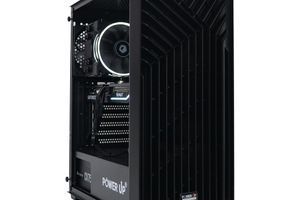
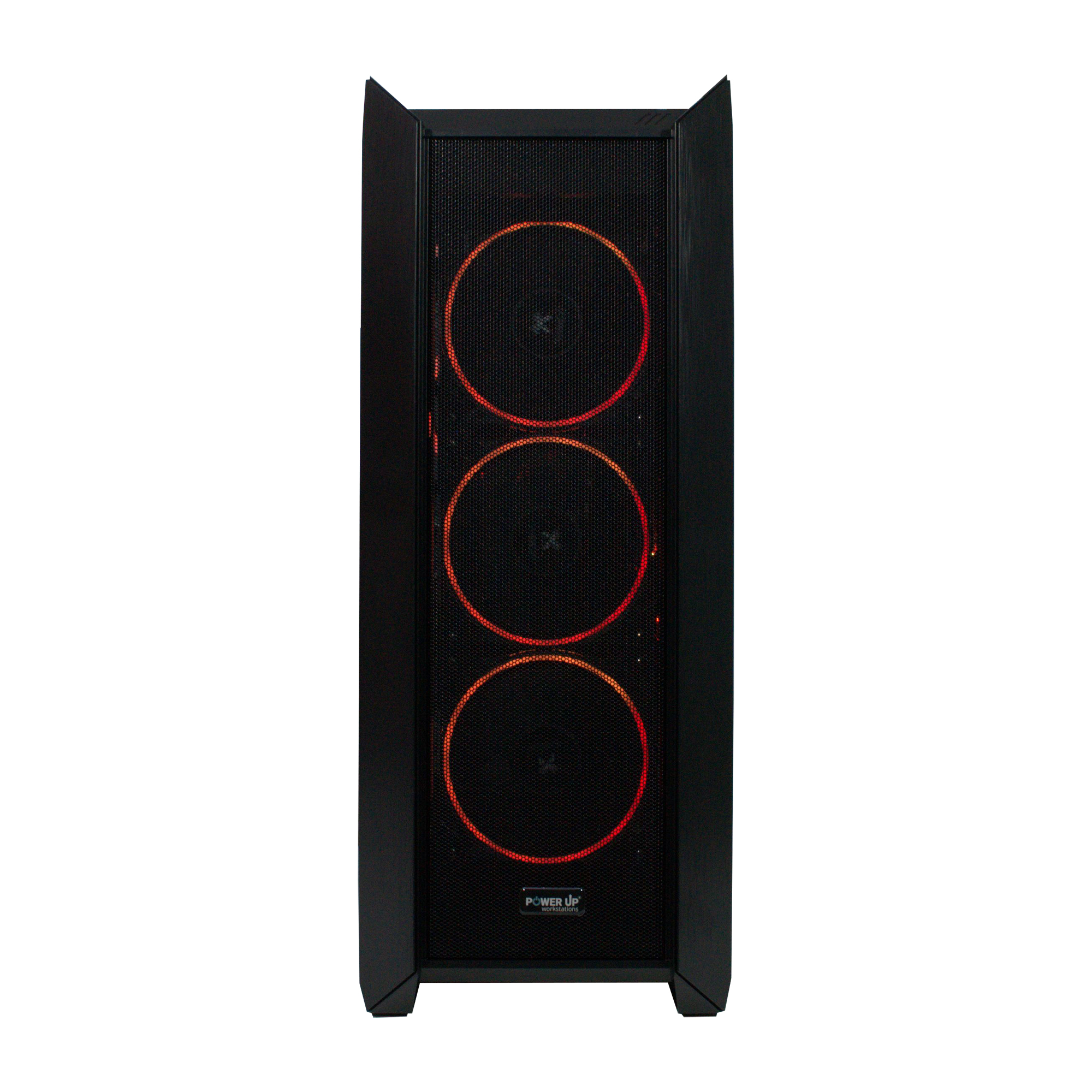
Case. This is not just a box, but the foundation for proper airflow. In 2026, it's worth choosing Mid-Tower cases with a front mesh panel. It ensures unobstructed intake of cool air. It's important to have at least 3-4 pre-installed fans and enough space for a long graphics card and a tall CPU cooler or AIO radiator. Good cable management not only improves aesthetics but also doesn't obstruct airflow.
Power Supply Unit (PSU). This is the heart of your PC. The stability of the voltage for all components depends on its quality. When choosing a PSU, three things are important:
- Wattage: Calculated with a 20-30% headroom over the system's peak consumption. A build with an RTX 5070 and Core Ultra 5 will require a 750-850W PSU. For an RTX 5080, 850-1000W is needed.
- 80 PLUS Certification: Indicates energy efficiency. The minimum standard today is 80 PLUS Bronze, but for powerful systems, Gold or Platinum is recommended. This ensures less heat, quieter operation, and savings on electricity bills.
- Modularity: Modular or semi-modular PSUs allow you to detach unused cables, which simplifies the build and improves airflow in the case.
Don't forget about a fast NVMe SSD, which also generates heat and often requires installation under a heatsink, which usually comes with the motherboard. A comprehensive approach to choosing these 'finishing touches' ensures that your new powerful PC will run quietly, coolly, and stably for years to come.
Advantages and Disadvantages of the Trade-in Program
Advantages
- ✔Saves time and effort: no need to create listings, communicate with buyers, and risk issues during the sale.
- ✔Financial benefit: you get a guaranteed discount on a new PC, avoiding a long wait to sell your old one.
- ✔Professional appraisal: specialists will accurately determine the market value of your components.
- ✔Security: the transaction is conducted with an official company, eliminating the risk of fraud.
Disadvantages
- ✖The appraised value might be slightly lower than what the luckiest sellers could get through a private sale.
- ✖Not all components may be accepted, especially if they are outdated or defective.
- ✖The program is tied to purchasing a new PC from the same store.
Choosing a New Build: How to Avoid Bottlenecks and Achieve Perfect Balance?
The biggest mistake when building or upgrading a PC yourself is an imbalance of components. Installing a flagship RTX 5080 graphics card with an old or budget processor is money thrown away. This phenomenon is called a bottleneck: one component (in this case, the processor) cannot process data fast enough for another, more powerful one (the graphics card), resulting in the entire system's performance being limited by the weakest link. The graphics card will be underutilized, and you won't get the desired FPS you were counting on.
To achieve a perfect balance of components, you need to match the processor and graphics card from the same performance class. In 2026, the following pairings are relevant:
- Entry Level (1080p gaming): A processor like the Intel Core Ultra 5 245F or AMD Ryzen 5 9600X will perfectly unlock the potential of an NVIDIA RTX 5060 graphics card.
- Mid-Range (2K gaming): For an NVIDIA RTX 5070, a more powerful CPU is required, such as the Intel Core Ultra 5 265K or AMD Ryzen 7 9700X. This combination is the 'golden mean' for price-to-performance ratio.
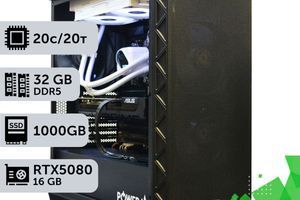
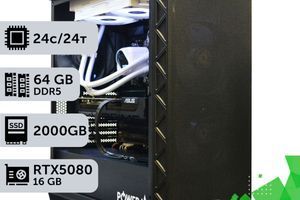
- High-End (4K gaming): Powerful graphics cards like the NVIDIA RTX 5080 or RTX 5090 demand no-compromise processors, for example, the Intel Core Ultra 7 275K or the gaming flagship AMD Ryzen 7 9800X3D with its massive L3 cache.
But a bottleneck can occur not just between the CPU and GPU. Slow RAM or an outdated SSD can also cause problems. For example, using DDR5 memory at 4800 MHz instead of the recommended 6400-7200 MHz can 'steal' up to 10-15% of FPS in CPU-dependent games. Similarly, installing a modern game on a slow SATA SSD, or even worse, an HDD, will lead to long loading times and micro-stutters in open-world games, even if you have a top-tier processor and graphics card.
| Component | Balanced Build (2K) | Unbalanced Build (CPU Bottleneck) | Unbalanced Build (RAM Bottleneck) |
|---|---|---|---|
| Processor | Intel Core Ultra 5 265K | Intel Core i3-14100F (outdated) | Intel Core Ultra 5 265K |
| Graphics Card | NVIDIA RTX 5070 16GB | NVIDIA RTX 5070 16GB | NVIDIA RTX 5070 16GB |
| RAM | 32GB DDR5 6400MHz CL32 | 32GB DDR5 6400MHz CL32 | 16GB DDR5 4800MHz CL40 |
| Result | Optimal performance, GPU at 99% load | GPU at 60-70% load, low FPS, freezes | Stuttering in games, FPS drops of 10-15% |
By turning to professionals for your build as part of a trade-in program, you are guaranteed this balance. Engineers will select components that perfectly complement each other, squeezing the maximum performance out of every dollar invested in the system.
How is Your Old PC Appraised: What Do Engineers Look For?
The process of appraising an old PC is a comprehensive procedure that goes far beyond simply looking at a list of components. Engineers aim to determine not only the current performance but also the remaining lifespan and the liquidity of the components on the secondary market. Here are the key stages your system goes through.
1. Visual Inspection and Completeness Check. At this stage, the overall condition of the PC is assessed. Scratches on the case, dust inside, the condition of the ports—all of this matters. The presence of original boxes and documentation is checked, which can slightly increase the final value. A missing side panel or non-working USB ports on the front panel can lower the price.
2. Performance and Stability Testing. This is the most important stage. The computer undergoes a series of stress tests in programs like AIDA64, OCCT, and FurMark. Engineers monitor the processor and graphics card temperatures under maximum load, checking for image artifacts and throttling (frequency reduction due to overheating). The stability of the RAM is tested using MemTest86. The goal is to ensure that all components are working within their standard parameters and have no hidden defects. Achieving a stable framerate in benchmarks (e.g., 3DMark) confirms the GPU is in good working order.
3. Component Relevance Analysis. This assesses how in-demand your components are. For example, an RTX 3080 graphics card, while still powerful, will be valued considering the performance of a new RTX 5060, which offers support for the latest DLSS technology and better performance in ray-traced games with lower power consumption. A processor without support for modern instructions or a motherboard with an outdated socket will have a lower valuation.
- Graphics Card: The main asset. The model, memory size, and condition of the cooling system are evaluated.
- Processor: The generation, number of cores/threads, and support for modern technologies are important.
- Motherboard: The chipset, condition of the socket, and VRM (processor power delivery area) are assessed.
- RAM: Type (DDR4/DDR5), capacity, frequency, and timings.
- Storage Drives: The 'health' of SSDs/HDDs is checked via S.M.A.R.T. NVMe drives are valued higher than SATA SSDs.
- Power Supply: Wattage, energy efficiency certification (80 Plus Bronze, Gold), and manufacturer.
The final amount is formed as a sum of the value of all liquid components. Understanding these criteria will help you prepare your PC for trade-in and get the fairest possible appraisal.
| Purpose | Recommended Graphics Card | Processor | Approximate Budget (UAH) |
|---|---|---|---|
| Full HD (1080p), high FPS | NVIDIA GeForce RTX 5060 12 GB | Intel Core Ultra 5 245F / AMD Ryzen 5 9600X | 45,000 - 60,000 |
| 2K (1440p), ultra settings | NVIDIA GeForce RTX 5070 16 GB | Intel Core Ultra 5 265K / AMD Ryzen 7 9700X | 70,000 - 95,000 |
| 4K (2160p), no-compromise gaming | NVIDIA GeForce RTX 5080 20 GB | Intel Core Ultra 7 275K / AMD Ryzen 7 9800X3D | 120,000 - 180,000 |
How to Properly Choose RAM and Storage for Maximum Performance?
The processor and graphics card are the muscles of a gaming PC, but without a fast nervous system in the form of RAM and storage, they can't work at full capacity. In 2026, the standards have changed, and choosing these components requires just as much attention as choosing a CPU or GPU. Skimping on them can lead to hidden bottlenecks that will negate the power of your entire system.
Let's start with DDR5 RAM. The Intel Core Ultra 200 and AMD Ryzen 9000 platforms have completely switched to this standard, and using old DDR4 is no longer possible. But simply buying any DDR5 module is not enough. Three parameters are important: capacity, frequency, and timings (latency).
- Capacity: 32 GB (2x16 GB) is the new gold standard for a gaming build. 16 GB is no longer enough to run a demanding game, Discord, a browser with a dozen tabs, and other background applications simultaneously. The system will have to use the slow page file on the SSD, which will cause freezes. 64 GB is still excessive for gaming but can be useful for professional video or 3D work.
- Frequency: The 'sweet spot' for DDR5 in 2026 is a frequency of 6000-6400 MHz. Slower modules (4800-5200 MHz) will limit the performance of processors, especially AMD Ryzen. Faster ones (7200 MHz and above) provide minimal gains in games but cost significantly more and require careful tuning.
- Timings (CL): This refers to the memory's latency. The lower the CL (Cas Latency) value, the better. For a frequency of 6000-6400 MHz, CL30 or CL32 would be optimal.
After building the PC, it is crucial to conduct a system stress test, including the memory (for example, using the TestMem5 utility), to ensure its stable operation with the XMP/EXPO profile activated in the BIOS. It is properly selected RAM that ensures smooth gameplay.
Now for storage. The era of hard disk drives (HDDs) in gaming PCs is definitively over. Even SATA SSDs are now considered a compromise. The standard for installing the operating system, programs, and modern games is an NVMe SSD with a PCIe interface. In 2026, two generations are relevant:
| Characteristic | PCIe 4.0 NVMe SSD | PCIe 5.0 NVMe SSD |
|---|---|---|
| Read Speed (average) | ~7,000 MB/s | ~12,000 - 14,000 MB/s |
| Write Speed (average) | ~6,000 MB/s | ~10,000 - 12,000 MB/s |
| Purpose | Optimal choice for games and OS | For enthusiasts and working with very large files |
| Heat | Moderate, requires a heatsink | High, requires active cooling |
| Price | Affordable | High |
For most gamers, a 2 TB PCIe 4.0 NVMe SSD will be the ideal choice. It provides almost instantaneous system and game loading. PCIe 5.0 drives do not yet offer a noticeable advantage in games, but if you work with 8K video or other huge files, their speed may be justified.
Step-by-Step Process for Trading in Your Old PC
This guide will help you navigate the entire process of exchanging your old computer for a new one: from initial preparation to receiving a modern, game-ready system.
Step 1: Preliminary Self-Assessment and Preparation
Make a list of all your PC's components (processor model, graphics card, RAM capacity and type, storage drives). Back up all important data from your drives. Clean the computer of dust and tidy up its appearance. Find the boxes and documents for the components, if you still have them.
Step 2: Submitting an Application and Initial Consultation
Fill out the Trade-in form on the website, specifying your old PC's configuration and your general preferences for the new one. A manager will contact you to clarify the details and provide a preliminary estimated value. You will also discuss the configuration of the new computer.
Step 3: Diagnostics at the Service Center
Bring or send your old PC to our service center. Engineers will conduct a full diagnostic: visual inspection, stress tests to check stability and temperatures, and analysis of the storage drives' condition. The procedure usually takes 1 to 3 business days.
Step 4: Finalizing the Value and Configuration
Based on the diagnostic results, you will be informed of the exact appraised value of your old PC. If you agree, this amount is locked in as a discount. you will then finalize the configuration of the new PC, and the order will be sent for assembly.
Step 5: Assembly and Testing of the New PC
Our engineers will professionally assemble your new computer. Special attention is paid to cable management, airflow setup, and software installation. After assembly, the new system undergoes a 24-hour stress test to guarantee complete stability.
Step 6: Receiving Your Finished System
You receive your new, fully configured and tested gaming PC. All that's left is to plug it in at home and enjoy gaming at maximum settings. The new build comes with a full warranty.
Frequently Asked Questions (FAQ)
Can I trade in only some components, like a graphics card and processor?
Yes, many companies, including PowerUp, accept not only complete PCs but also individual liquid components: graphics cards, processors, motherboards, and RAM. The appraised value will be calculated for each component separately.
What if my computer doesn't turn on?
You can still submit an application. Engineers will perform diagnostics and try to determine the cause of the fault. If some components (like the power supply) have failed but others (processor, memory) are functional, the value of the working parts will be credited.
How do you guarantee the security of my data on the old drives?
We recommend that you delete all personal information yourself before trading in the PC. However, at your request, our engineers can perform a full format of the drives using special software that permanently erases data.
How long does the entire process take, from application to receiving the new PC?
On average, the entire process takes from 3 to 7 business days. 1-3 days are for diagnosing your old PC, and 2-4 days are for assembling, configuring, and testing the new system. Timelines may vary depending on the service center's workload.
Will my new computer have a warranty?
Absolutely. All new components and the assembly as a whole come with a full official warranty. The Trade-in program does not affect warranty obligations in any way.
Can I pay the remaining balance in installments?
Yes, most stores offer various financial tools. The amount remaining after deducting the value of your old PC can be paid at once or financed through a loan or installment plan from partner banks.