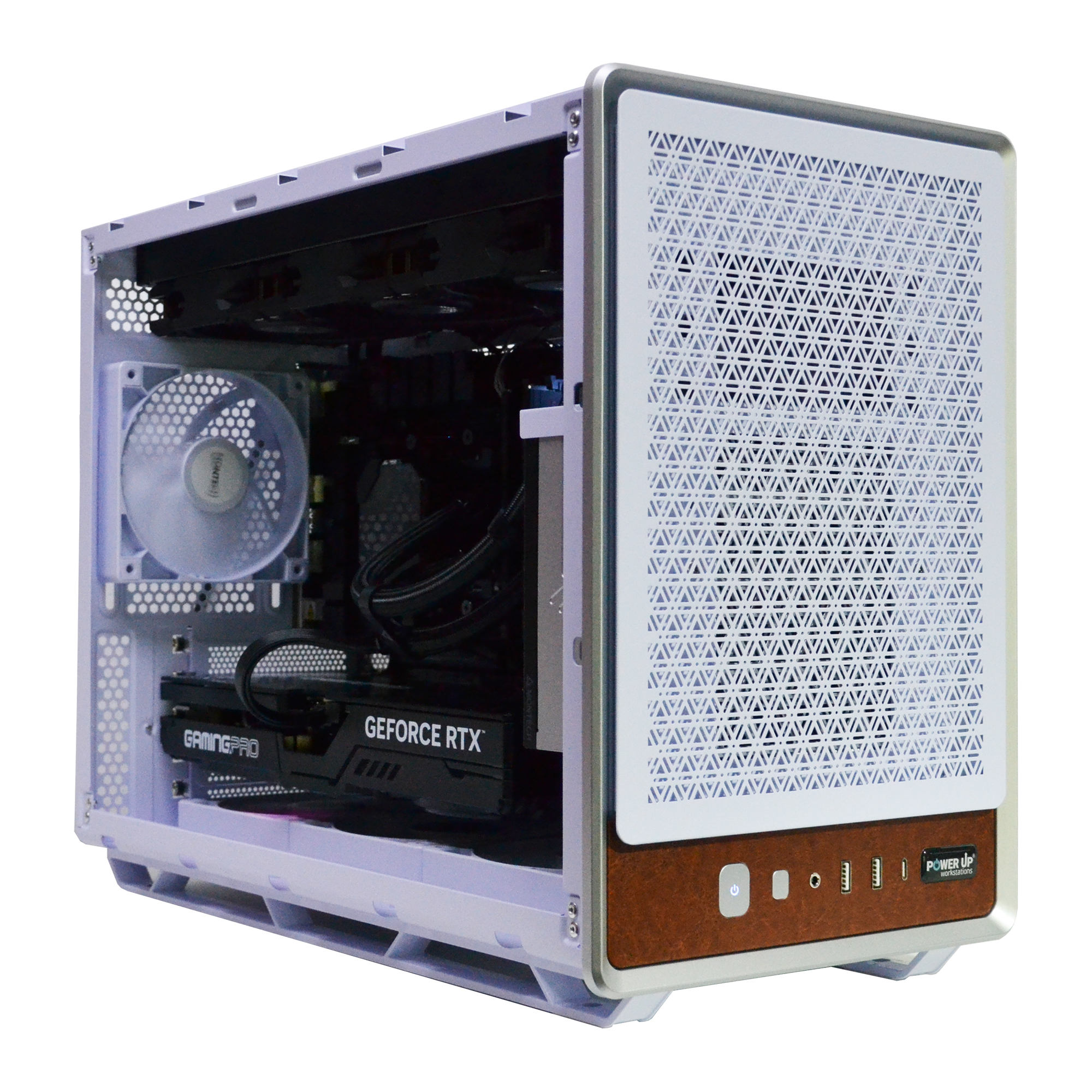
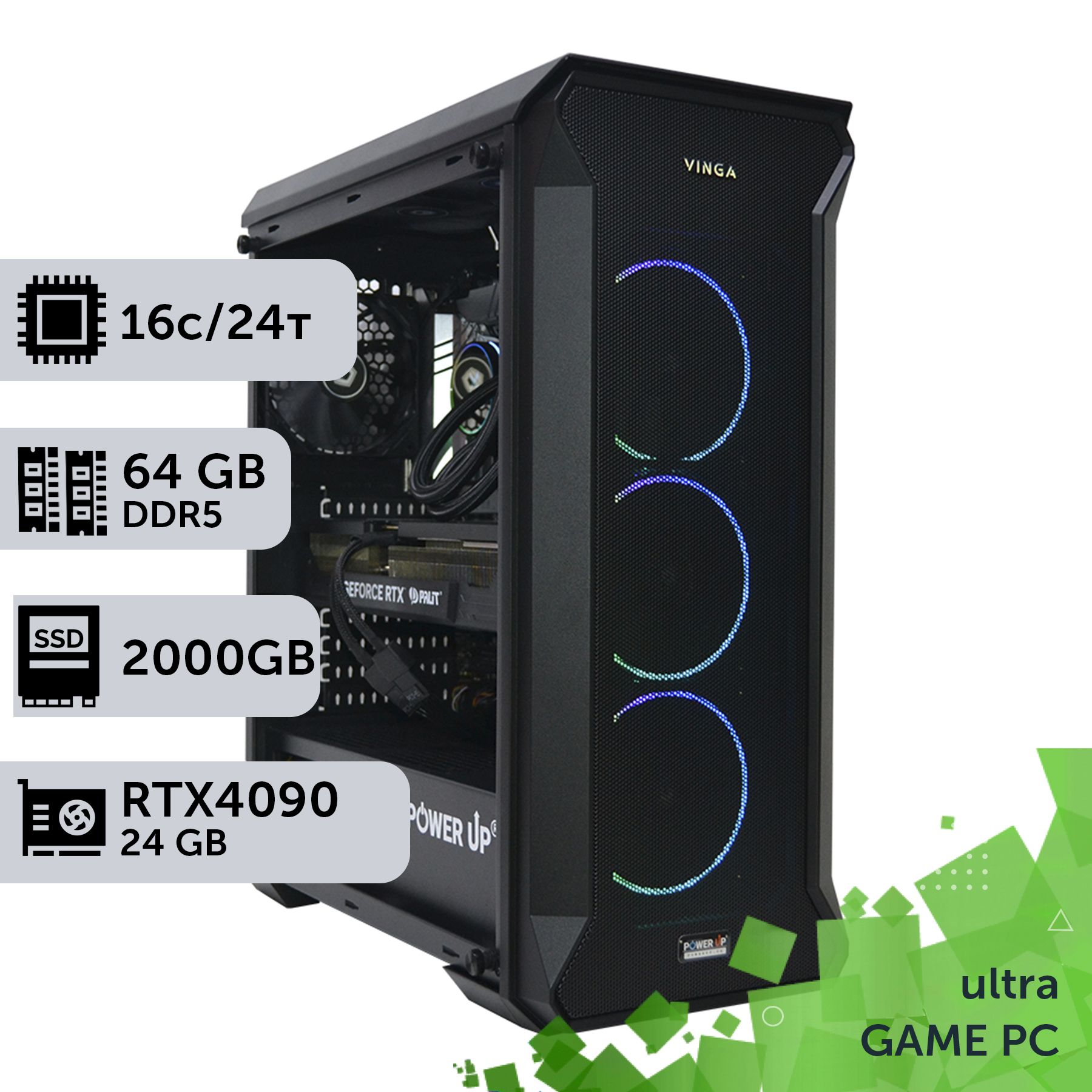
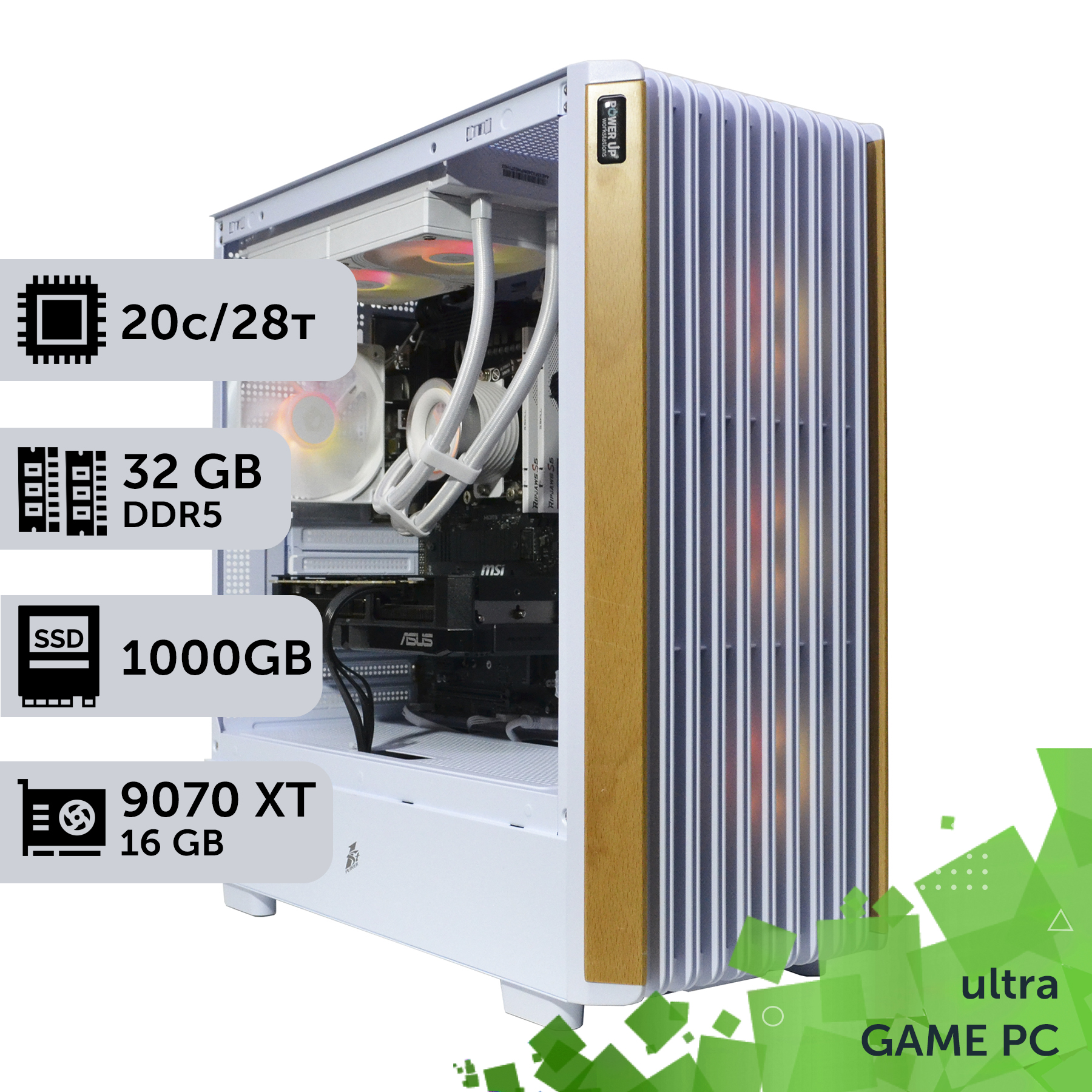
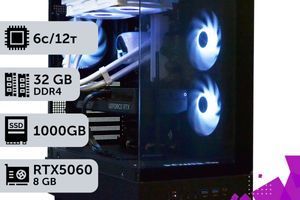
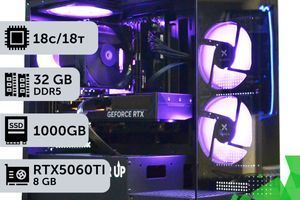
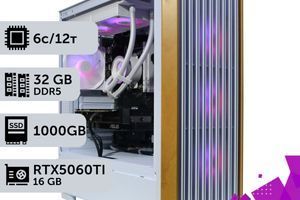
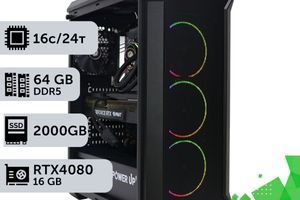
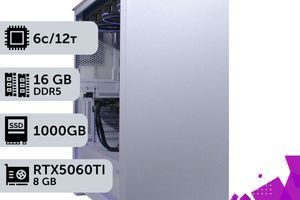
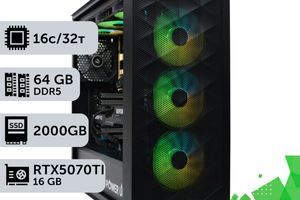
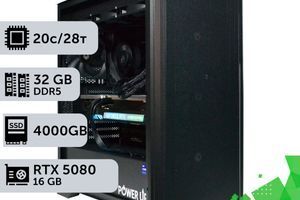
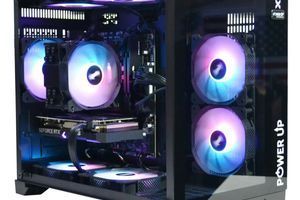
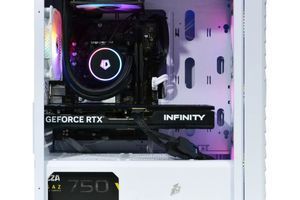
The physical lifespan of components (5-10 years) significantly exceeds their relevance for gaming (2-4 years).
The key to a long-lasting 2026 build is an initial margin of safety: a graphics card with 16+ GB of VRAM, 32 GB of DDR5 RAM, and a high-quality power supply with a 20-30% power overhead.
The graphics card is the first and main candidate for an upgrade; its life cycle in a single build is typically 2-3 years to maintain a high level of graphics.
Investing in the platform (motherboard + processor) and power supply pays off in the long run, allowing for graphics card upgrades without replacing the entire system.
Buying or building a gaming PC in 2026 is a serious investment. The prices of flagship components, such as NVIDIA RTX 50-series graphics cards or Intel Core Ultra 200 processors, make you think about the main thing: how long will this power remain relevant? The question of 'how long a gaming PC lasts' breaks down into two key aspects: physical wear and tear, and technological obsolescence. While the first is relatively simple — high-quality components with proper care can last 5-10 years or more — the second is more complex. New game engines, like Unreal Engine 5 with its Nanite and Lumen technologies, impose increasingly strict requirements on hardware, especially on the amount of video memory and the speed of the storage subsystem. The purpose of this article is to provide an honest and technically sound answer to the question of a modern gaming computer's longevity. We won't be talking about abstract concepts. Instead, we will analyze the real life cycle of each key component: from the graphics card, which is the first to take the hit from technological progress, to the power supply unit, on which the stability and safety of the entire system depend. We will analyze what 'margin of safety' is needed today so that in 2-3 years you don't find yourself with low FPS and the inability to enable all graphics options in a hypothetical GTA VI or The Elder Scrolls VI. This guide will help you build not just a powerful, but a smart and forward-thinking PC that will delight you with stable performance for as long as possible.
Graphics Card: The Heart of a Gaming PC and Its Main Limiter
The Graphics Processing Unit (GPU) is the component with the shortest cycle of technological obsolescence. It is what determines whether you can enjoy 4K gaming with ray tracing or will be forced to lower settings to medium in just a couple of years. Physically, a graphics card can last a very long time. The main points of failure are the cooling system (fans) and the degradation of thermal interfaces (thermal paste, thermal pads). With regular cleaning from dust and replacing the thermal paste every 2-3 years, a card can work for 7-10 years. However, its gaming relevance will run out much sooner. The main enemy of the GPU is technological progress. New versions of DirectX, APIs, upscaling technologies (DLSS, FSR), and, of course, the growing appetites of game engines. In 2026, the de facto standard for AAA projects is Unreal Engine 5. Its demands on video memory (VRAM) are colossal. While in 2023-2024, 12 GB of VRAM was considered sufficient for 2K, it is now the minimum for comfortable 1080p gaming with high textures. For 4K gaming, models with 16 GB of VRAM or more must be considered. Skimping on video memory is a guaranteed and very quick upgrade. It's also important to consider power consumption. Flagship RTX 50-series models can consume 400-500W, which requires not only a powerful power supply but also a well-ventilated case with proper cable management for effective heat dissipation. Overheating is a direct path to performance reduction (throttling) and a shortened chip lifespan. Let's look at the expected performance of current builds in popular games.
Estimated FPS in 2026 Games (Ultra Settings, DLSS/FSR Quality)
Graphics Card
Cyberpunk 2077 (4K)
GTA VI (1440p)
CS2 (1080p, Esports)
RTX 5060 12GB
~45-55 FPS
~70-80 FPS
~400-500 FPS
RTX 5070 16GB
~70-85 FPS
~110-130 FPS
~600-700 FPS
RTX 5090 24GB
~130-150 FPS
~180-220 FPS
~800-1000 FPS
The life cycle of a graphics card directly depends on its positioning.
Budget Segment (RTX 5050/5060): Relevance for new titles on high settings — 1.5-2 years. After that, a switch to medium settings or an upgrade.
Mid-Range Segment (RTX 5070/5070 Ti): The optimal choice. Provides comfortable gaming at high/ultra settings for 2-3 years. The most balanced option in terms of price/longevity.
Top-Tier Segment (RTX 5080/5090): Maximum performance for 3-4 years ahead. The cost is high, but it's the price for uncompromising gaming and the longest technological relevance.
How Much RAM is Needed and How Quickly Do SSDs Age?
Random Access Memory (RAM) and Solid-State Drives (SSD) are components whose aging is the most unnoticeable to the user but can become a serious bottleneck for the entire system. Physically, DDR5 RAM modules are practically eternal. Cases of their failure without external causes (power surge, physical damage) are extremely rare. The technological obsolescence of RAM occurs in two areas: capacity and speed. In 2026, 16 GB of RAM is the absolute minimum for a gaming system, which is already becoming insufficient for some open-world projects and heavy background tasks. The optimal and forward-thinking choice is to install 32 GB. This amount will be enough for the vast majority of games for the next 4-5 years. As for speed, the DDR5 standard offers a wide range of frequencies, from 5200 MHz to 8000+ MHz. Chasing the maximum frequency is not always justified, as the performance increase in games is non-linear. A balance between frequency and timings (latency) is much more important. A build with 32 GB of DDR5-6400 CL32 will remain relevant much longer than a system with 16 GB of DDR5-7600 CL38. NVMe SSDs have radically changed the user experience, reducing game and level loading times to a few seconds. Their main longevity parameter is the endurance rating (TBW, Terabytes Written). For a gamer, this resource is practically inexhaustible. For example, a 1 TB SSD with a 600 TBW rating means you can completely rewrite it every day for over a year and a half. In reality, the gaming workload is much lower. According to independent tests by Tom's Hardware, even with very active use, a gamer writes an average of 15-25 GB per day. At this rate, the SSD's resource will last for 20-30 years. The technological obsolescence of SSDs is related to speed and support for new technologies like DirectStorage, which allows the graphics card to load data directly from the drive, bypassing the processor. This is especially important for games with seamless worlds and fast texture streaming, where Ray Tracing is enabled. Therefore, when building a PC in 2026, it is worth choosing an NVMe SSD with a PCIe 4.0 or 5.0 interface to avoid creating a bottleneck for your powerful graphics card.
Recommended Storage Volume and Type in 2026
Purpose
System Drive (OS, software)
Gaming Drive
Budget Build
512 GB NVMe PCIe 4.0
1 TB NVMe PCIe 4.0
Optimal Build
1 TB NVMe PCIe 4.0
2 TB NVMe PCIe 4.0/5.0
Top-Tier Build
1 TB NVMe PCIe 5.0
4 TB NVMe PCIe 5.0
Estimated Gaming PC Configurations and Their Budgets in 2026
Purpose
Recommended Graphics Card
Processor
Approximate Budget (UAH)
Full HD (1080p) / Esports
GeForce RTX 5060 12GB
Intel Core Ultra 5 245H / AMD Ryzen 5 9600X
45,000 - 60,000 UAH
2K (1440p) / Optimal Gaming
GeForce RTX 5070 16GB / Radeon RX 8800 XT 16GB
Intel Core Ultra 7 265H / AMD Ryzen 7 9700X
75,000 - 110,000 UAH
4K (2160p) / Ultimate Gaming
GeForce RTX 5080 20GB / GeForce RTX 5090 24GB
Intel Core Ultra 9 285K / AMD Ryzen 9 9900X3D
150,000 - 250,000+ UAH
Processor and Motherboard: How Durable is the System's Foundation?
The Central Processing Unit (CPU) ages much more slowly than the graphics card. Game engines are still more demanding on single-core performance and clock speed than on a huge number of cores. A modern 8-core AMD Ryzen 7 9700X or Intel Core Ultra 7 265H processor, released in 2025-2026, will remain more than sufficient for gaming for 4-6 years. Its performance will be enough to 'unlock' the potential of not only the current but also the next generation of graphics cards. Therefore, the key aspect when choosing a CPU is not chasing the maximum number of cores, but choosing a forward-looking platform. A platform is the combination of the processor, chipset, and socket on the motherboard. A good choice allows for an easy PC upgrade in the future by simply replacing the old processor with a new, more powerful one, without changing the motherboard and RAM. In 2026, two key platforms are relevant:
AMD Socket AM5: AMD is historically known for long-term support of its sockets. The AM5 platform, which debuted with the Ryzen 7000 series, will continue to receive new processors until at least 2027, making it an excellent long-term investment.
Intel Socket LGA 1851/2551: Intel changes sockets more often, but the new platforms for Arrow Lake and Panther Lake processors have brought support for advanced standards like PCIe 5.0 for GPUs and SSDs, as well as Wi-Fi 7.
When choosing a motherboard, you cannot skimp on the processor's power delivery system (VRM). A quality board with a powerful power subsystem and good heatsink cooling will ensure stable operation of even flagship processors when overclocked and will not become a bottleneck for future upgrades. It is also worth paying attention to the presence of a sufficient number of M.2 slots for high-speed SSDs and support for high-frequency DDR5 memory. The right choice of the system's foundation determines whether your gaming computer will be a flexible platform for improvements or a closed system requiring a complete replacement in 3 years.
Comparison of AMD and Intel Platforms for 2026
Parameter
AMD AM5
Intel LGA 1851/2551
Memory Support
DDR5
DDR5
PCIe Support
PCIe 5.0
PCIe 5.0/6.0 (depending on the board)
Upgrade Path
High (socket support until 2027+)
Medium (socket change likely after 2 generations)
Energy Efficiency
Very High (Zen 5/6 architecture)
Competitive (new process technologies)
Thus, the processor and motherboard are the foundation on which you should not economize. Their lifespan is measured not so much by gaming performance as by their technological margin of safety and potential for future upgrades.
What You Absolutely Cannot Skimp On: Power Supply, Cooling, and Case
In the pursuit of high FPS, gamers often invest their entire budget into the graphics card and processor, leaving the purchase of the power supply unit (PSU), cooling system, and case as an afterthought. This is a strategic mistake that shortens the lifespan of the entire PC and can lead to fatal consequences. A power supply with an 80 Plus certification (Bronze, Gold, Platinum) is not a marketing gimmick, but a guarantee of stability and safety. A cheap, no-name PSU not only has low efficiency, turning electricity into heat, but also provides unstable voltage with high ripple. This slowly kills the sensitive electronics of the motherboard, graphics card, and storage drives. A quality power supply from a trusted brand (e.g., Seasonic, Corsair, be quiet!) with Japanese capacitors and a 10-year warranty is a component that can outlive 2-3 full system upgrades. Its physical lifespan is enormous. When choosing the wattage, always get a 20-30% overhead. If your system's peak consumption is 500W, choose a 650-750W PSU. This will allow it to operate at its optimal efficiency range (usually at 50-60% load) and provide headroom for future upgrades. For a powerful esports build, where absolute stability is crucial, it is recommended to choose models with an 80 Plus Gold certification or higher. The cooling system is another critically important element. Modern processors and graphics cards generate a huge amount of heat. Inefficient cooling leads to throttling — the forced reduction of clock speeds to prevent overheating. As a result, you pay for a flagship component but get mid-range performance.
Lifespan and Efficiency of Cooling Systems
Cooling Type
Approximate Lifespan
Typical Points of Failure
Maintenance
Air Cooler (Tower)
10+ years
Fan (5-7 years)
Fan replacement, heatsink cleaning
All-in-One (AIO) Liquid Cooler
5-7 years
Pump, liquid evaporation
Non-serviceable (require full replacement)
The case is not just a box. The temperatures of all components directly depend on its airflow. A case with good perforation, dust filters, and enough space for cable management is the key to the long and stable operation of the entire system. Skimping on these three components is a lottery where the win is doubtful, and the loss could cost you the entire computer.
Building a 'Future-Proof' PC: Advantages and Risks
Advantages
✔Long-term savings: by investing in a top-tier platform once, you can just change the graphics card every 3-4 years.
✔Stable and high performance without compromises for the first 2-3 years.
✔Less hassle with upgrades: no need to rebuild the entire PC, just replace one or two components.
✔High liquidity on the secondary market: top-tier components depreciate more slowly.
Disadvantages
✖Very high initial cost, requiring a significant budget.
✖Risk of overpaying for excessive power that may not be fully utilized in current games.
✖Rapid depreciation of flagship solutions with the release of each new generation.
How to Tell Your PC is Obsolete and It's Time for an Upgrade?
The realization that your faithful gaming rig can no longer 'keep up' doesn't come all at once. It's a gradual process that can be diagnosed by a number of objective signs. The main indicator is the system's inability to maintain a stable framerate at the desired level. If you're used to playing at 60+ FPS, and in new projects, the frame counter constantly drops to 30-40 even after lowering the settings, this is the first and surest sign. This is especially noticeable in scenes with a lot of effects or in large open locations. The second important sign is software limitations. A new game is released with support for the revolutionary DLSS 4.0 frame generation technology, but your graphics card doesn't support it at the hardware level. Or a new fast-loading feature requires DirectStorage 2.0, and your motherboard or SSD doesn't meet the specifications. This is technological obsolescence in its purest form — the hardware still works, but it can no longer provide access to all modern features. To determine the weak link accurately, you need to conduct a comprehensive system stress test. You can use specialized software for this:
OCCT: A comprehensive test that allows you to load the processor, graphics card, memory, and power supply separately, monitoring temperatures, frequencies, and voltage stability.
AIDA64 Extreme: An excellent tool for testing CPU and RAM stability, as well as for monitoring all system sensors.
FurMark or 3DMark: Specialized benchmarks for maximum GPU load, which help identify overheating or artifact issues.
MSI Afterburner: A utility for real-time monitoring of metrics directly in games. Displaying CPU usage per core, GPU load and temperature, VRAM and RAM usage on the screen will help you understand exactly which component is reaching its 100% limit and becoming a bottleneck.
Analyzing the results of these tests will give a clear answer. If in games the graphics card load is constantly at 99-100%, and the processor is loaded at 50-60%, then the GPU is the performance limiter and the first candidate for replacement. If, on the contrary, one or more processor cores are constantly maxed out while the graphics card is idle, it's time to think about upgrading the platform. Constant game crashes, blue screens of death (BSOD), or sudden reboots under load often indicate problems with RAM or degradation of the power supply, which can no longer handle the load. These are not just signs of obsolescence, but signals of an impending physical failure of a component.
Assessing Your PC's Lifespan: A Simple 3-Step Audit
This guide will help you, without special equipment, to estimate how much longer your gaming computer will last and which component will become the 'weak link' first.
Step 1: Monitoring Performance in Games
Install the MSI Afterburner utility with RivaTuner Statistics Server. Configure the overlay to display the following parameters on the screen: GPU usage (%), GPU temperature (°C), GPU core clock (MHz), VRAM usage (MB), CPU usage per core (%), CPU temperature (°C), RAM usage (MB), and frame rate (FPS). Play the most demanding games from your library for 20-30 minutes. If the GPU usage consistently stays at 98-100% and the CPU usage does not exceed 70-80%, your system is balanced, and its performance is limited by the graphics card. If the GPU is not fully utilized, and one or more CPU cores are constantly at 100% — you have a processor bottleneck.
Step 2: Analyzing Temperatures and Stability
Download and run the OCCT program. Conduct a 30-minute stress test for the CPU (Linpack) and a 30-minute one for the GPU (3D Standard). Carefully monitor the temperature graphs. For modern processors, a critical temperature is considered to be 95-100°C, and for graphics cards — 85-90°C. If your components reach these values or close to them under load, the cooling system is not coping. This leads to throttling (performance reduction) and accelerated wear. If the computer reboots during the test or the test ends with an error, this may indicate problems with the power supply or RAM.
Step 3: Checking Future-Proofing
Open the system requirements for 2-3 of the most anticipated games that will be released in the coming year. Compare them with your configuration. Pay special attention to the recommended (not minimum) requirements for VRAM and RAM capacity. If your system barely meets the minimum requirements, it's a clear sign that comfortable gaming in new titles will no longer be possible. Also, check if your graphics card supports the latest versions of technologies like DLSS/FSR or hardware-accelerated ray tracing, which will be actively used in future projects.
Frequently Asked Questions (FAQ)
What becomes obsolete faster in a gaming PC: do components physically wear out or become technologically outdated?
Definitely technologically outdated. The physical lifespan of high-quality components with proper care (cleaning, thermal paste replacement) is 7-10 years or more. However, their relevance for running new games at high settings is lost much faster — on average, in 2-4 years, with the graphics card being the first to go.
Is it worth buying used components in 2026 to save money?
It's very risky. This is especially true for graphics cards and power supplies. Graphics cards may have been used for mining, which leads to severe degradation of the chip and cooling system. Used power supplies may have dried-out capacitors and fail to deliver the rated power, which is dangerous for the entire system. It is acceptable to buy used processors or RAM, as these components are least susceptible to wear.
How often should I clean my PC from dust and replace the thermal paste?
Cleaning dust with compressed air is recommended every 3-6 months, depending on the dustiness of the room. A full replacement of the thermal paste on the processor and graphics card should be done every 2-3 years. High-quality thermal paste dries out over time and loses its thermal conductivity, which leads to increased temperatures and reduced performance.
The lifespan of a gaming PC is not a constant, but a flexible value that depends on your initial investment, expectations, and willingness to upgrade. In the reality of 2026, a build 'for the ages' is impossible, but you can assemble a balanced and forward-thinking system that will please you with high performance for 3-4 years, requiring only a graphics card replacement. The key to success is not to chase the most expensive components, but to invest in a quality foundation: a platform with an upgrade path, a reliable power supply, and effective cooling. Not sure where to start, or want to get a perfectly balanced build for your budget and tasks? Check out the PowerUp catalog of pre-built gaming PCs or contact our engineers for a personal consultation. We will help you build a computer that will be your faithful companion in virtual worlds for years to come.