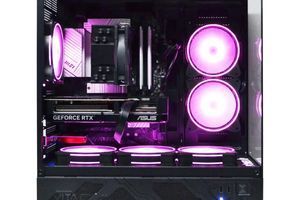
Key Takeaways (TL;DR):
- Performance without compromise: modern Mini-ITX builds based on the RTX 50-series and Ryzen 9000 are on par with full-sized ATX systems.
- Cooling is the key challenge: the right choice between a low-profile air cooler and an AIO, as well as proper airflow management, are critically important.
- Careful component selection: an ITX motherboard, an SFX/SFX-L power supply, and a graphics card compatible with the case dimensions are necessary.
- The price of compactness: be prepared that SFF components (motherboard, PSU, case) are on average 15-25% more expensive than their ATX counterparts.
Advantages and Disadvantages of Mini-ITX Builds
Advantages
- ✔Compactness and aesthetics: Takes up minimal desk space, is easy to transport, and looks stylish.
- ✔Equivalent performance: With proper cooling, the power is comparable to ATX systems.
- ✔Focus on quality: SFF components are often premium products with high efficiency.
- ✔Quiet operation: Due to limited space, users often choose high-quality and quiet cooling components.
Disadvantages
- ✖High assembly difficulty: Tight component layout and cable management require patience and experience.
- ✖Cooling limitations: Impossible to install massive tower coolers or 360mm AIOs.
- ✖High price: Specialized components (motherboard, PSU) cost more than their counterparts.
- ✖Minimal upgrade options: Limited number of slots and physical space.
Choosing the Case and Power Supply: The Foundation of the System
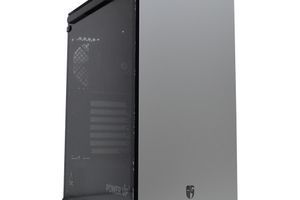
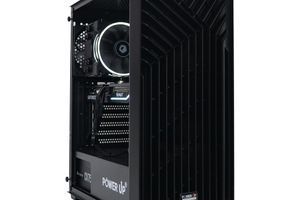
Choosing the case is the first and most crucial decision that will determine all subsequent steps. In 2026, several types of Mini-ITX cases dominate the market:
- Sandwich-style: Components are placed on either side of a central partition (e.g., Lian Li A4-H2O, Fractal Design Ridge). Excellent for powerful graphics cards but require an AIO for the processor.
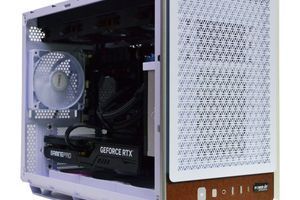
- Tower-style: A smaller version of standard cases (e.g., Cooler Master NR200P). They offer the best balance of compatibility with air cooling and large graphics cards.
- Console-style: Ultra-compact and slim cases, ideal for the living room (e.g., Fractal Design Node 202). Often have the strictest limitations on CPU cooler height.
The key partner for the case is a power supply with an 80 Plus Gold or Platinum certification. For SFF builds, SFX and SFX-L formats are used. High efficiency is critical, as less energy is converted into heat, which is a decisive factor in a confined space. The wattage should be chosen with a 20-30% headroom over the system's peak consumption. For a build with an RTX 5070 and a Core Ultra 7 265K, a high-quality 750-850W SFX power supply would be optimal.

| Purpose | Recommended Graphics Card | Processor | Approximate Budget (UAH) |
|---|---|---|---|
| Full HD (1080p), high FPS | NVIDIA GeForce RTX 5060 12 GB | AMD Ryzen 5 9600X / Intel Core Ultra 5 250K | 55,000 - 65,000 |
| 2K (1440p), ultra settings | NVIDIA GeForce RTX 5070 16 GB | AMD Ryzen 7 9700X / Intel Core Ultra 7 265K | 90,000 - 110,000 |
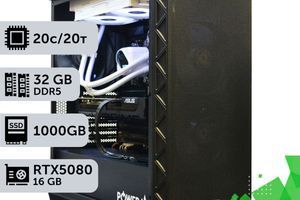
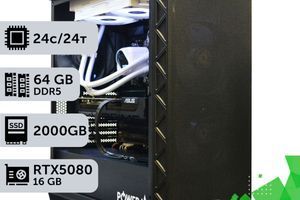
| 4K (2160p), uncompromising gaming | NVIDIA GeForce RTX 5080 20 GB | AMD Ryzen 9 9900X / Intel Core Ultra 9 285K | 140,000 - 170,000 |
Cooling: The Battle for Every Degree and Decibel
In a compact build, every component affects the temperature of its neighbor. You can't just install a powerful processor and graphics card without planning for heat dissipation. There are two main approaches to CPU cooling:
- Low-profile air cooling: Solutions from Noctua (NH-L9, NH-L12S) or Scythe (Big Shuriken 3) are ideal for processors with a TDP of up to 125W. They are reliable and quiet, but their performance may not be sufficient for flagship chips in Turbo Boost mode.
- All-in-One (AIO) liquid cooling system: 120mm or 240mm radiators are often the only way to effectively cool a hot AMD Ryzen 9 9900X or Intel Core Ultra 9 285K processor. An AIO expels heat directly outside the case, which positively affects the overall internal temperature.
Equally important is proper cable management. Every extra cable in the airflow path can raise temperatures by 2-3°C. Using modular PSUs and custom-length cables is not a luxury, but a necessity. The system's quietness directly depends on cooling efficiency: the lower the temperatures, the lower the fan speeds can be, creating a comfortable acoustic environment for late-night gaming sessions.

Component Selection: The Art of Avoiding a 'Bottleneck'
Selecting components for a Mini-ITX build is a balancing act. An ITX format motherboard has only two RAM slots and one PCIe x16 slot. Therefore, it's worth investing in a good kit of fast 32 GB DDR5 RAM with a frequency of 6400-7200 MHz right away. This will cover gaming needs for years to come. The primary storage should be an M.2 NVMe PCIe 5.0 drive, as it requires no extra cables and takes up no space.
Pay closest attention to the graphics card dimensions. Before buying, you need to check three parameters in the case specifications:
- Maximum length: Modern flagships can exceed 330 mm.
- Maximum thickness: Indicated in slots (2, 2.5, 3 slots).
- Maximum height: Important for sandwich-style cases where power cables can press against the side panel.
Creating a balanced system where the processor fully utilizes the graphics card and there's no bottleneck is especially important in the ITX format. It makes no sense to pair a Core Ultra 9 285K with an RTX 5060 for 4K gaming. Refer to the combinations suggested in the table above and to independent tests from Tom's Hardware to make a final decision.

Real-World Performance: FPS in 2026 Games
A compact size does not mean compromised performance. A mid-to-high-end build based on an AMD Ryzen 7 9700X and an NVIDIA GeForce RTX 5070 with 32 GB of DDR5-6800 can provide a comfortable gaming experience even in the most demanding titles. Here are approximate FPS figures at ultra settings with ray tracing enabled and DLSS/FSR in 'Quality' mode.
| Game | Resolution 2560x1440 (2K) | Resolution 3840x2160 (4K) |
|---|---|---|
| Cyberpunk 2077 (Phantom Liberty) | ~95 FPS | ~60 FPS |
| Grand Theft Auto VI | ~85 FPS | ~55 FPS |
| Counter-Strike 2 | ~450 FPS | ~250 FPS |
These numbers prove that a modern gaming PC in a Mini-ITX case is a full-fledged machine for 2K and even entry-level 4K gaming. The main thing is to provide the components with adequate cooling so they don't throttle due to overheating during long gaming sessions.

Step-by-Step Guide to Building a Quiet and Cool Mini-ITX PC
This guide will help you avoid overheating and excess noise by correctly selecting and installing components in a compact case, as well as performing basic system setup.
Step 1: Planning Airflow
Before buying components, study the case's ventilation scheme. Determine where the intake fans (usually bottom or side) and exhaust fans (top or rear) will be installed. Create a directed airflow path that passes over the processor and graphics card heatsinks. This is the foundation of effective cooling.
Step 2: Choosing the Optimal CPU Cooling
For processors with a TDP of up to 125W (e.g., Ryzen 7 9700X in Eco-Mode), a high-quality low-profile air cooler is suitable. For hotter chips (Core Ultra 9 285K), a 240mm AIO is the only viable option if the case allows it. Check the compatibility of the cooler height or radiator thickness with your case.
Step 3: Selecting a 'Cool' Version of the Graphics Card
Study reviews and tests of different vendor versions of the same GPU model. Models with more massive cooling systems may not fit, but versions with simpler cooling can be 5-10°C hotter and louder. Find a golden mean that fits in terms of size and efficiency.
Step 4: Sequential Assembly and Cable Management
In an ITX build, the installation order is important. It usually goes like this: CPU and RAM on the motherboard -> motherboard into the case -> connect case cables -> install PSU -> route power cables -> install graphics card. Use zip ties and adhesive pads to secure cables and keep them from obstructing airflow.
Step 5: BIOS Setup and Undervolting
After assembly, enter the BIOS/UEFI. Enable the XMP/EXPO profile for the memory. Then, configure the fan curves to balance cooling and quietness. To reduce temperatures, undervolt the CPU and GPU using specialized utilities (Intel XTU, AMD Ryzen Master, MSI Afterburner). This can reduce heat output by 10-20% with almost no performance loss.
Frequently Asked Questions (FAQ)
Can a full-size graphics card be installed in a Mini-ITX case?
Yes, most modern ITX cases (especially those with a volume of 15-20 liters) support the installation of long (up to 330-340 mm) and even triple-slot graphics cards. However, you must always check the exact GPU dimensions against the specifications of the specific case model.
How much more expensive is an ITX build compared to an ATX build of similar power?
On average, 15-25% more. The main extra cost comes from the compact motherboard, the SFX/SFX-L power supply, and the case itself. These components are produced in smaller batches and require more complex engineering, which affects the price.
Is such a system very noisy under load?
It depends entirely on the quality of the cooling components and their setup. A properly assembled system with an AIO and high-quality fans (like Noctua or be quiet!) can be even quieter than many budget ATX builds. The key to success is undervolting and fine-tuning the fan curves.
How difficult is it to upgrade a PC in this format?
Significantly more difficult than in ATX. Replacing a single component, such as the power supply or motherboard, often requires almost a complete disassembly of the entire system. Expansion capabilities (additional drives, expansion cards) are also severely limited to one or two M.2 slots and no free PCIe slots.
Which cooling is ultimately better for ITX: air or water?
For processors with a TDP up to 125W (like a Ryzen 7 / Core i7 without overclocking), a top-tier air cooler like the Noctua NH-L12S is sufficient. For more powerful CPUs, especially flagship models from Intel and AMD, a 240mm AIO liquid cooling system will be significantly more effective and allow the processor to run at maximum frequencies for longer.