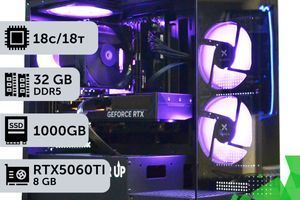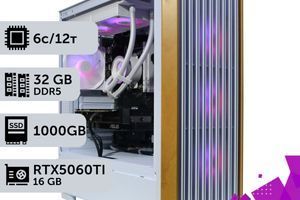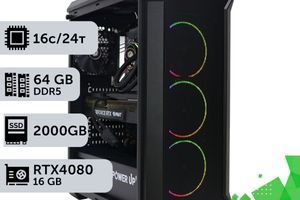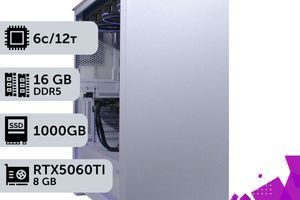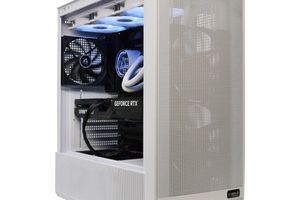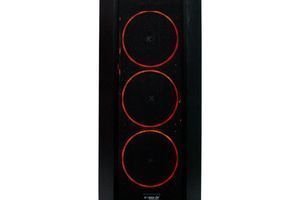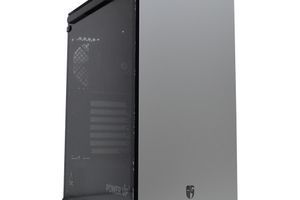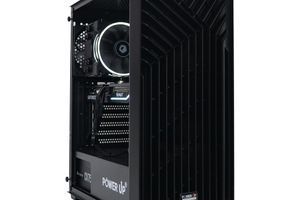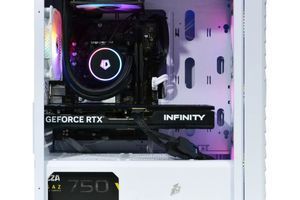
Key Takeaways (TL;DR):
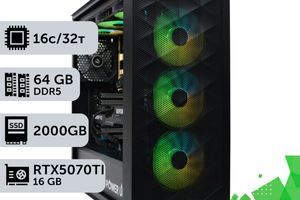
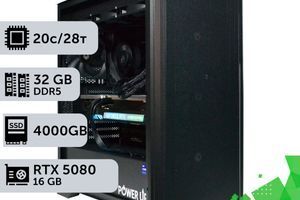
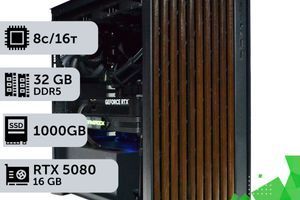
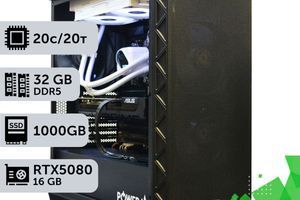
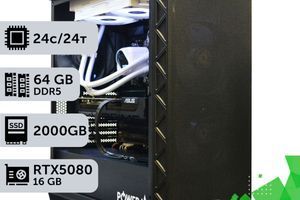
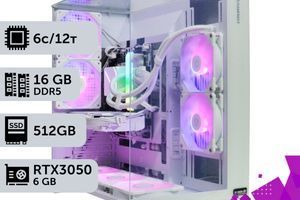
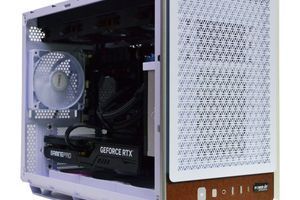
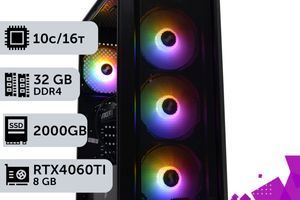
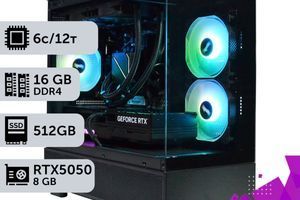
- In 2026, due to shortages, builders get RTX 50-series graphics cards at wholesale prices, making a pre-built PC cheaper than buying the same parts at retail.
- Pre-built systems eliminate the risk of component incompatibility and bottlenecking, as all parts are selected and tested by engineers.
- You get a single warranty for the entire computer, not for a dozen individual components, which simplifies repairs and maintenance.
- Saves time and nerves: no need to spend weeks searching for parts, studying forums, and taking risks during assembly. You get a fully tested, turnkey machine.
The 2026 Shortage: Why Are Graphics Cards 'Golden' Again?
The component market in 2026 continues to be in a fever pitch. The new generation of NVIDIA GeForce RTX 50 graphics cards, built on the Blackwell architecture, has proven to be so powerful that demand has exceeded all forecasts. They are being actively bought up not only by gamers but also by AI specialists. As a result, retail prices for popular models like the RTX 5070 and RTX 5080 have skyrocketed, and their availability in stores has become a rarity.
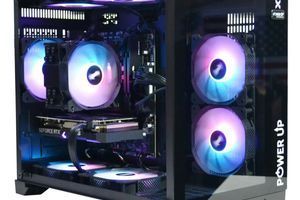
Large builders, like PowerUp, have direct contracts with manufacturers and purchase components in huge batches. This allows them to get graphics cards and processors at prices unavailable to the average consumer. That's why the final cost of a pre-built gaming PC is often lower than the sum of the prices of the same components if bought separately.

| Purpose | Recommended Graphics Card | Processor | Approximate Budget |
|---|---|---|---|
| Full HD (1080p) Gaming | NVIDIA GeForce RTX 5060 | Intel Core Ultra 5 240H / AMD Ryzen 5 9600X | from 50,000 UAH |
| 2K (1440p) Gaming | NVIDIA GeForce RTX 5070 | Intel Core Ultra 7 260H / AMD Ryzen 7 9700X | from 80,000 UAH |
| 4K (2160p) Gaming | NVIDIA GeForce RTX 5080 | Intel Core Ultra 9 280H / AMD Ryzen 9 9900X | from 130,000 UAH |
The 'Bottleneck' Problem and Component Balance
One of the most common mistakes beginners make when building their own PC is creating an unbalanced system. This phenomenon is called a bottleneck, where a powerful component sits idle because another, weaker one can't keep up with data processing. A classic example: installing a top-tier RTX 5080 graphics card with an old Intel Core i5 processor. The graphics card will run at half strength, and you won't get half the performance you paid for.
In pre-built systems, engineers carefully select each component to achieve a perfect balance. The processor, graphics card, motherboard, and even the speed of the DDR5 RAM — everything works as a single, coordinated mechanism. For example, AMD processors benefit from high RAM frequency, and this is always taken into account thanks to a deep understanding of AMD Ryzen technologies and their specifics.

Mythbusting: Do You Need a Core i9 and Water Cooling?
Marketing has taught us to think that you need the absolute top-tier processor for gaming, like an Intel Core Ultra 9. But this is a popular myth. For 99% of gaming tasks, the performance of an Intel Core Ultra 7 260H or AMD Ryzen 7 9700X is more than enough. They fully unlock the potential of even high-end graphics cards, and the money saved is better invested in a more powerful GPU.
Another myth concerns cooling systems. Many are afraid of water cooling due to the risk of leaks. Although modern AIOs are very reliable, they are not a necessity for most builds. A quality tower cooler from Noctua or be quiet! can cool even hot processors while running quieter and being absolutely reliable. For instance, a combination of an RTX 5070 and a Core Ultra 7 260H in a well-ventilated case will show excellent results in games on ultra graphics settings in 2K:
- Cyberpunk 2077 (Phantom Liberty): ~90-100 FPS with DLSS Quality + Ray Tracing.
- GTA VI: ~75-85 FPS on high settings.
- CS2: ~400-500 FPS, which is more than enough for any esports athlete.

Warranty and Cable Management: The Hidden Advantages of a Pre-built PC
When you buy components separately, you get a dozen warranty cards. If something fails, a quest begins: you have to diagnose the problem yourself, remove the part, take it to a service center, and wait for a decision. With a pre-built PC, it's all simpler — you go to one place, and specialists solve the problem themselves. It's a single warranty for the entire system unit.
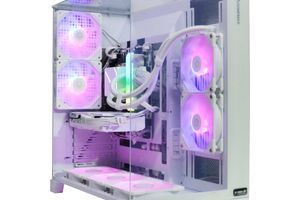
Don't forget about aesthetics and practicality. Professional cable management is not just for looks. Neatly arranged wires do not obstruct airflow, which directly affects the cooling and stability of the system. This is a detail often skimped on in self-builds, but it plays a huge role in the longevity of your PC.

Pre-built PC in 2026: Main Pros and Cons
Advantages
- ✔Lower prices on scarce graphics cards.
- ✔Professional assembly, setup, and cable management.
- ✔Full warranty on the assembled system from a single seller.
- ✔Saves time and eliminates risks associated with self-assembly.
Disadvantages
- ✖Less flexibility in choosing specific component models (e.g., motherboard or SSD brand).
- ✖Limited choice of cases within the builder's model range.
- ✖Inability to save on individual components by buying them on the second-hand market.
How to Choose the Perfect Pre-built Gaming PC in 2026
This step-by-step guide will help you navigate the world of pre-built gaming computers and choose a balanced machine that perfectly matches your tasks and budget, while avoiding overpaying for unnecessary options.
Step 1: Determine Your Budget and Monitor Resolution
Your monitor is the starting point. There's no point in buying a 4K-ready PC if you play on a Full HD screen. For 1080p, an RTX 5060 is sufficient; for 2K (1440p), an RTX 5070 is ideal; and for 4K, you'll need the power of an RTX 5080 or higher. This directly determines 80% of your budget.
Step 2: Choose the Key 'CPU + GPU' Combo
This is the heart of your PC. Ensure the components are balanced. For an RTX 5070, an optimal partner would be an Intel Core Ultra 7 or AMD Ryzen 7. Don't chase after a Core Ultra 9 unless you're a streamer or work with video editing.
Step 3: Check the RAM Amount and Speed
In 2026, the golden standard for gaming is 32 GB of DDR5 RAM. Pay attention to the frequency — for AMD Ryzen 9000-series processors, RAM with a frequency of 6000-6400 MHz is optimal.
Step 4: Evaluate the Cooling System and Case
Make sure the chosen processor has adequate cooling (a good 'tower' cooler or an AIO with 2-3 sections). The case should have good airflow: a mesh front panel and several fans are a must.
Step 5: Clarify Power Supply and Motherboard Details
This is the foundation of stability. The power supply should be from a reputable brand (Seasonic, Corsair, be quiet!) with an 80 Plus Gold certification and a 15-20% power overhead. The motherboard should have good heatsinks on the power delivery circuits (VRM).
Step 6: Review Warranty and Support Terms
Choose builders who provide a full warranty on the entire system unit for at least 2-3 years. Clarify if they have their own service support and how quickly they respond to inquiries.

Frequently Asked Questions (FAQ)
Can I upgrade a pre-built PC in the future?
Yes, absolutely. Professional builders like PowerUp use standard, non-proprietary components. You can easily replace the graphics card, add more RAM, or change the SSD in the future.
Is building a PC yourself really more expensive now?
Often, yes, especially for builds with powerful graphics cards. The retail markup on scarce GPUs can be so high that it negates any savings on other components. Pre-built PCs win on price due to bulk purchasing.
Which graphics card should I choose for comfortable 2K gaming in 2026?
The optimal choice for 1440p (2K) resolution is the NVIDIA GeForce RTX 5070. It provides an excellent balance of price and performance, allowing you to play all new titles on high or ultra settings with ray tracing.
How much RAM is needed for gaming in 2026?
32 GB of DDR5 has become the comfortable standard. While 16 GB is still the minimum acceptable threshold, many new games already use more, and 32 GB provides the necessary headroom for the future and for background applications.