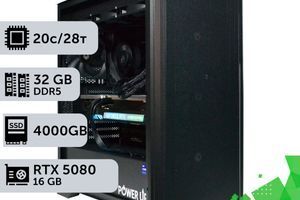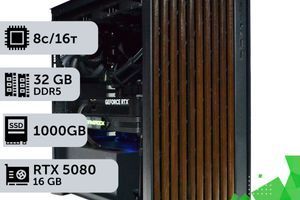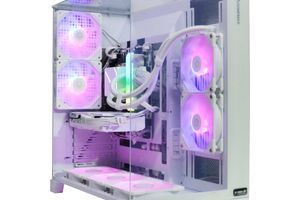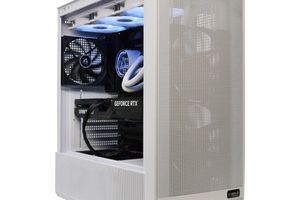
Key Takeaways (TL;DR):
- PSU modularity does not increase FPS and barely affects temperatures: in a case with a power supply shroud, the difference is within the margin of error. It is only noticeable in compact cases and cases without a shroud.
- The actual overpayment for modularity on the exact same platform is 400-1000 UAH (Deepcool PN750D/PN750M and PN850D/PN850M, October 2026), which is 0.3-1.8% of a gaming PC's cost.
- For RTX 50-series graphics cards, three things are more important than modularity: the wattage recommended by NVIDIA, the ATX 3.1 standard with a native 12V-2x6 cable, and an 80 PLUS Gold certification or higher.
- A semi-modular PSU is the optimal choice for most builds. A fully modular one is justified for SFF cases, custom sleeved cables, and frequent upgrades.
575W is the rated power consumption of the GeForce RTX 5090, 360W for the RTX 5080, and up to 250W at peak (PL2) for the Intel Core Ultra 7 265KF and Core Ultra 9 285K processors. A power supply in a 2026 build handles loads that, five years ago, were exclusive to workstations, and it is precisely here that people most often try to cut costs. The most frequent question when choosing a PSU is: is it worth paying extra for a modular design?
Marketing promises "better airflow," "a few degrees cooler," and "stable FPS" from modularity. We compared these promises with actual Ukrainian market prices, ATX 3.1 specifications, and the practical experience of the PowerUp assembly shop. The short answer: modularity is about build convenience, a clean look, and easy upgrades, not about temperatures and performance. System stability is determined by wattage, the internal platform, and connector standards.
Below, we will break down the differences between the three types of PSUs, how much modularity costs in Hryvnias, when you actually need it, and what is more important than it in 2026: ATX 3.1, the 12V-2x6 cable, and certification.
What is a modular power supply and how does it differ?
A Power Supply Unit (PSU) converts 230V alternating current from the wall outlet into 12V, 5V, and 3.3V direct current for PC components. Based on how cables are connected, PSUs are divided into three types, and in any build—from an office PC to an esports rig—the difference between them boils down to how many cables will be left inside the case.
- Non-modular: all cables are hardwired into the PSU housing. Unused cables must be bundled up and hidden inside the PSU shroud or behind the motherboard tray.
- Semi-modular: only the essential cables required in any build are hardwired—the 24-pin for the motherboard and the 8-pin (EPS) for the processor. Cables for the graphics card, SATA, and Molex are detachable.
- Fully modular: all cables are detachable, including the 24-pin and EPS. This allows replacing them with custom sleeved cables and makes building in compact cases much easier.
An important nuance often overlooked: the 24-pin and EPS are plugged in for every build, so in terms of "extra" cables, a semi-modular PSU is virtually identical to a fully modular one. The difference lies in installation convenience and the ability to replace the main cables, not in case clutter.
| Feature | Non-modular | Semi-modular | Fully modular |
|---|---|---|---|
| Cable connection | All hardwired | 24-pin and EPS hardwired, others detachable | All detachable |
| Cable management | Difficult, excess hidden in shroud | Easy | Easiest, custom cables can be installed |
| Impact on temperatures (case with shroud) | Within margin of error | Within margin of error | Within margin of error |
| Extra cost on same platform | Base price | Small | +400-1000 UAH |
| Best suited for | Budget and office PCs in cases with a shroud | Most gaming builds | SFF cases, custom cables, frequent upgrades |
Temperatures and airflow: what modularity actually changes
The main argument from modular PSU sellers is "fewer cables, better airflow, lower temperatures." The physics are correct, but the scale of the effect is highly exaggerated. Airflow in a case travels from the front fans to the rear and top exhausts. Cables only impede it if they physically lie in this path: blocking the front intake, dangling below the GPU fans, or resting on top of the M.2 heatsink.
In 2026, almost all ATX cases feature a power supply shroud (often called a "basement") and a compartment behind the motherboard tray. The excess cables of a non-modular PSU go there, outside the main airflow path. This is exactly why independent comparisons of "neat" and "messy" cable management in such cases show a difference of 1-2°C or entirely within the margin of error. Claims of a 3-7°C temperature drop across all components "just from modularity" are not supported by tests or practical assembly experience.
| Scenario | Impact on temperatures | Is modularity needed? |
|---|---|---|
| ATX case with a shroud, cables hidden inside | Within margin of error | No, neat cable routing is enough |
| Case without a shroud, cable bundle lies near bottom fans | Noticeable for the GPU and bottom M.2 | Recommended (semi-modular or modular) |
| Compact Mini-ITX / SFF case | Noticeable, there is almost no free space | Yes, preferably fully modular SFX format |
| Cables blocking front intake fans | Noticeable for the whole system | Issue with routing, not the PSU type |
If you plan to check your system, run a system stress test in AIDA64 or OCCT for 20-30 minutes with the case closed: the temperatures of the graphics card, processor, and NVMe SSD drive will show if there is a real airflow problem. In the vast majority of cases, it is solved by proper fan placement, not by replacing the power supply. A correct hardware balance means, first and foremost, a case with good air intake and an adequate CPU cooling system—an air tower or liquid cooling (AIO) suited for your CPU's actual PL2 limit.

| Purpose | Graphics Card | Processor | Wattage & PSU Type | Build Budget (UAH) |
|---|---|---|---|---|
| Full HD (1080p) | GeForce RTX 5050 / 5060 | Core Ultra 5 225F / Ryzen 5 9600X | 550-650W, 80 PLUS Gold, non-modular or semi-modular | 45,000 - 65,000 |
| 2K (1440p) | GeForce RTX 5060 Ti / 5070 | Core Ultra 7 265KF / Ryzen 7 9700X | 650-750W, 80 PLUS Gold, ATX 3.1, semi-modular | 80,000 - 120,000 |
| 4K (2160p) & VR | GeForce RTX 5080 / 5090 | Core Ultra 9 285K / Ryzen 9 9900X3D | 850W (RTX 5080) or 1000W (RTX 5090), 80 PLUS Gold+, ATX 3.1, modular | 130,000 - 200,000+ |
Does PSU modularity affect frame rate (FPS)?
No. The type of cable connection alters neither the voltage on the 12V line nor the frequency of the CPU and GPU. A modular and a non-modular PSU on the same platform—for instance, Deepcool PN850M and PN850D—have identical internal electronics, 80 PLUS Gold certification, and the ATX 3.1 standard. In Cyberpunk 2077 or S.T.A.L.K.E.R. 2, they will output the exact same frame rate (FPS).
The indirect impact via temperatures is also minimal. NVIDIA graphics cards step down their boost clocks gradually as temperatures rise, and a 1-2°C difference resulting from neat cable management in a case with a shroud does not lead to a noticeable FPS drop. Even a power-hungry AMD Ryzen processor like the 9 9950X3D (170W TDP) relies on the quality of its cooler and case airflow, not on whether the PSU cables can be detached.
Performance and stability are genuinely affected by other PSU parameters:
- Wattage. A PSU weaker than NVIDIA's recommendation (850W for RTX 5080, 1000W for RTX 5090) might trigger over-current protection during peak loads—this results in unexpected PC shutdowns mid-game.
- ATX 3.0/3.1 Standard. It guarantees the PSU can withstand transient power spikes from the GPU up to 200% of its nominal wattage for up to 100 microseconds.
- Platform Quality. Voltage stability and ripple suppression impact crashes, BSODs, and component longevity.
- 12V-2x6 Connector. A native cable without adapters reduces the risk of pin overheating.
Conclusion: modularity is a matter of convenience, while stable framerates are guaranteed by the PSU's power, standard, and quality.

How much does modularity really cost and is it worth saving on?
You can accurately compare the price of modularity only on the exact same platform: identical wattage, certification, fan, and electronics, with the only difference being the cables. Deepcool offers exactly such pairs: the PN-D (non-modular) and PN-M (fully modular) series, both featuring 80 PLUS Gold and ATX 3.1.
| Wattage | Non-modular (PN-D) | Modular (PN-M) | Surcharge |
|---|---|---|---|
| 750W, 80 PLUS Gold, ATX 3.1 | PN750D — from 4,299 UAH | PN750M — from 5,247 UAH | +948 UAH (+22%) |
| 850W, 80 PLUS Gold, ATX 3.1 | PN850D — from 5,099 UAH | PN850M — from 5,479 UAH | +380 UAH (+7%) |
That results in 400-1000 UAH, rather than the 1500-3000 UAH often cited. Now let's compare this amount to the overall cost of a gaming PC. Below are median prices for pre-built systems from the PowerUp catalog by GPU class as of October 2026.
| Build Class | Median PC Price (UAH) | A 400-1000 UAH surcharge is |
|---|---|---|
| RTX 5060 | ~55,000 | 0.7-1.8% |
| RTX 5070 | ~92,500 | 0.4-1.1% |
| RTX 5080 | ~154,000 | 0.3-0.7% |
For context: in 2026, the biggest hit to a build budget comes not from the power supply, but from memory. Due to the DRAM shortage, a 32GB DDR5 kit in Ukrainian stores costs 24,000-39,000 UAH—which is 25-40 times more than the premium for a modular PSU. If you want to save money, calculate these expenses first—for example, by choosing a pre-built system with the necessary DDR5 RAM capacity rather than buying modules separately.
Conclusion on price: on a high-end build targeting ultra graphics settings and Ray Tracing, saving 400-1000 UAH on modularity is pointless, but overpaying for a modular PSU with an inferior platform or without ATX 3.1 is a mistake. Below is a benchmark guide on what performance an RTX 5080 build delivers in 4K based on independent tests (using a processor like the Ryzen 7 7800X3D).
| Game and Settings | Without Frame Generation | With DLSS Frame Generation |
|---|---|---|
| Cyberpunk 2077, Ultra + Ray Tracing, DLSS Quality | ~60 FPS | ~90 FPS (x2, Psycho, DLSS Balanced) |
| S.T.A.L.K.E.R. 2: Heart of Chornobyl, Epic, DLSS Quality | 60-70 FPS | 120-130 FPS |
| Counter-Strike 2, max settings, native resolution | 200+ FPS (CPU bottleneck) | Not supported (no DLSS in CS2) |
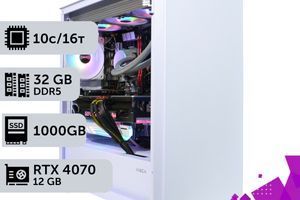
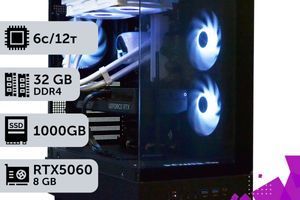
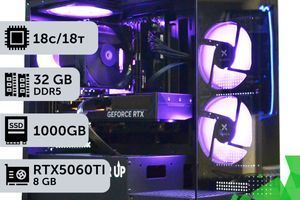
GTA VI is intentionally left out of this table: the game launches on November 19, 2026, only on PlayStation 5 and Xbox Series X|S; a PC version is not announced as of October 2026. Any FPS figures for it right now are pure fiction. You can pick a well-balanced pre-built gaming PC with a properly calculated power supply in the PowerUp catalog.

How does a modular PSU simplify future upgrades?
Here modularity provides a real, rather than a marketing, advantage. When upgrading your PC, you are working inside a case where the GPU, cooler, and drives are already installed. With a non-modular PSU, you have to dig the necessary connector out of a tight bundle in the shroud; with a modular one, you simply connect the new cable to the unit and route it to the component.
- GPU replacement: a new RTX 50-series card connects via a single 12V-2x6 cable. If your modular PSU includes it, you just plug it into the unit. However, if the PSU itself lacks a 16-pin port, neither modularity nor its absence will help—you'll have to change the PSU or use an adapter, which we do not recommend.
- Adding drives: extra SATA SSDs or HDDs are connected via a separate cable from the kit, without having to search for a free connector inside a bundle.
- Custom cables: individually sleeved cables can only be fitted to a modular PSU, and only those specifically made for that PSU series.
- Transferring to a new case: a modular PSU is easier to migrate into a compact case, bringing only the necessary cables.
If you swap your graphics card every 2-3 years and build your own PCs, the 400-1000 UAH extra is paid back in convenience. If the PC is bought pre-assembled and serviced by professionals, the benefit of modularity is reduced. The golden rule of upgrading is to eliminate the bottleneck: when moving to an RTX 5080-tier card, ensure the PSU wattage meets NVIDIA's recommendations, not just that "all the connectors are there."

Pros and cons of modular power supplies
Advantages
- ✔Ease of assembly and maintenance: only necessary cables are plugged in, making mounting and cleaning the PC faster.
- ✔Neat appearance: it's easier to achieve a clean build inside a panoramic glass case.
- ✔Convenient upgrades: a new GPU or drive is plugged in with an independent cable without undoing a bundle.
- ✔Compact builds: in Mini-ITX and SFF cases, extra wires physically impede airflow, and modularity solves this.
Disadvantages
- ✖Price: on the exact same platform, a modular PSU is 400-1000 UAH (7-22%) more expensive.
- ✖Risk of losing cables: detachable wires are easily misplaced when moving, and replacements must strictly match the PSU series.
- ✖Cable incompatibility: pinouts on the PSU end are unique to every manufacturer and even across different series—using another unit's cable can fry components.
- ✖Extra contact point: every connector on the PSU side is one more joint that must be fully seated. In practice, this does not affect performance.
Aesthetics and cable management in a glass case
A 2026 gaming PC almost always sits in a case with panoramic glass, making the visual appeal of the build an independent selection criteria. A neat cable management setup is easiest to achieve with a modular or semi-modular PSU: you route only the required cables behind the motherboard tray and secure them with zip-ties or Velcro straps.
A clean build is also possible with a non-modular PSU—provided the case has a power supply shroud and adequate clearance behind the tray. Problems arise in compact Mini-ITX and Micro-ATX cases: there is physically nowhere to hide extra wires, and they end up obstructing the air intake to the GPU. For such builds, an SFX format modular PSU is practically mandatory.
Modularity also opens the door to customization: CableMod and other brands produce sleeved cables in any color. When buying them, verify compatibility with your specific PSU series, and for RTX 50-series GPUs, choose only 12V-2x6 cables from trusted brands—an error in pinout or a poor-quality connector is far more dangerous than any aesthetic flaw.
- Clean look: no "web" of wires visible behind the glass.
- Focus on components: nothing distracts from the GPU, motherboard, and cooling system.
- Lighting: RGB looks more striking in an uncluttered space.
- Custom cables: colored sleeving is only available for modular PSUs.
For high-end systems utilizing DLSS technology with multi-frame generation and Ray Tracing, performance is dictated by the graphics card and its cooling. Aesthetics here are a bonus, not a factor for FPS.

ATX 3.1 and 12V-2x6 compatibility: why it's more important than modularity
Modern graphics cards can consume significantly more than their rated power for fractions of a millisecond. Older power supplies reacted to such surges by triggering protection circuitry, shutting down the PC mid-game. To solve this, Intel released the ATX 3.0 standard (March 2022), and later ATX 3.1 (September 2023).
| Parameter | ATX 3.0 | ATX 3.1 |
|---|---|---|
| Release date | March 2022 | September 2023 |
| Short-term power excursions | Up to 200% of PSU rating for 100 μs | Up to 200% of PSU rating for 100 μs |
| Hold-up time at full load | 17 ms | 12 ms (17 ms recommended at 80% load) |
| GPU power connector | 12VHPWR (16-pin, up to 600W) | 12V-2x6 (16-pin, up to 600W) |
The 12V-2x6 connector is a refined version of 12VHPWR: the power terminals inside are longer, and the sense pins are shorter. If the plug is not fully seated, the GPU will not receive permission to draw full power. One such cable transmits up to 600W and replaces four 8-pin PCIe 150W connectors. Modular PSU cables are inter-compatible between revisions: the changes are confined to the headers on the GPU and the power supply.
However, the melting connector issue hasn't been entirely eliminated. In September 2026, the Hardware Unboxed team recorded a 12V-2x6 cable heating up to 175°C on an ASUS ROG RTX 5090 Astral with a be quiet! Dark Power Pro 13 PSU: the current was routed through only two out of six power lines. Practical guidelines for the RTX 5080 and RTX 5090:
- Native cable: use the 12V-2x6 cable supplied with the PSU, not an 8-pin adapter.
- Until it clicks: insert the plug all the way in, ensuring there is no gap between the connector housing and the socket.
- No sharp bends: do not bend the cable tightly right next to the GPU connector.
- Secondary check: after the first week of heavy load, check if any wiggle room or discoloration has appeared on the connector.
Buying a PSU without ATX 3.1 and a native 12V-2x6 in 2026 makes no sense: your next graphics card will almost certainly require this connector. A properly chosen motherboard and modern power supply form the foundation of your system, and modularity is merely a nice addition to them. Details of the ATX 3.1 specification are analyzed in an article by Hardware Busters.
How important is 80 PLUS certification for stable framerates?
The 80 PLUS certificate indicates power supply efficiency—what portion of the wattage drawn from the wall reaches the components, and what part is lost as heat. The higher the efficiency, the less the PSU heats up and the quieter its fan operates. The certificate doesn't directly dictate FPS, but high-efficiency PSUs are usually built on higher-quality platforms with lower ripple, which is critical for 4K gaming under prolonged heavy loads.
| Certification | Efficiency at 20% Load | Efficiency at 50% Load | Efficiency at 100% Load | Recommendation |
|---|---|---|---|---|
| 80 PLUS Bronze | 85% | 88% | 85% | Minimum for budget builds |
| 80 PLUS Gold | 90% | 92% | 89% | Optimum for most gaming PCs |
| 80 PLUS Platinum | 92% | 94% | 90% | Silent systems and PCs running many hours daily |
| 80 PLUS Titanium | 94% | 96% | 94% | 24/7 Workstations |
Beyond 80 PLUS, Cybenetics certification with two ratings—ETA (efficiency) and LAMBDA (noise)—is increasingly common. For a gamer, this is more useful because it helps to pick out a power supply that is not only efficient but also quiet.
For the GeForce RTX 5090 graphics card, Platinum or Titanium is not strictly required: PowerUp workstations with the RTX 5090 employ 1000W PSUs with 80 PLUS Gold certification, which is perfectly adequate given a high-quality platform and ATX 3.1 support. Unstable power delivery from a cheap PSU without certification or with a fake one manifests as micro-stutters, crashes, and BSODs, and in the worst case, hardware failure. Therefore, the priority list when choosing is: wattage, ATX 3.1 & 12V-2x6, platform quality and at least Gold certification, and only then modularity.
How to choose and install a modular power supply
This step-by-step guide will help you select a power supply for an RTX 50-series graphics card, install it, and connect the cables without errors that lead to shutdowns and connector melting.
Step 1: Calculating required power
Start with the graphics card manufacturer's recommendation: NVIDIA suggests 650W for the RTX 5070, 750W for the RTX 5070 Ti, 850W for the RTX 5080, and 1000W for the RTX 5090. Then verify the result in an online calculator (like be quiet! or Seasonic) factoring in your processor. For a build with an RTX 5070 and Core Ultra 7 265KF (PL2 up to 250W), a 750-850W PSU is optimal.
Step 2: Choosing certification and standard
Pick a PSU certified no lower than 80 PLUS Gold (or Cybenetics Gold), featuring the ATX 3.1 standard and a native 12V-2x6 cable. Decide on the cable connection type last: semi-modular for most builds, or fully modular for SFF cases and custom sleeved cables.
Step 3: Physical installation
Secure the power supply unit using the four included screws. If there's a perforated vent with a dust filter at the bottom of the case, mount the PSU with its fan facing down—this way it draws cool air from outside rather than hot air from inside the system.
Step 4: Connecting necessary cables
Plug only the required cables into the unit: 24-pin ATX for the motherboard, 8-pin (4+4) EPS for the CPU, 12V-2x6 for the graphics card, and SATA for the drives. Only use the cables provided with that specific PSU. Push the 12V-2x6 connector in until it clicks on both sides, leaving no gap.
Step 5: Routing and cable management
Route the cables through the cutouts behind the motherboard tray and secure them with zip ties or Velcro. Do not bend the graphics card cable right at the connector base. Ensure no wire blocks the fans or rests over an M.2 drive.
Frequently Asked Questions (FAQ)
Does a modular power supply lower graphics card temperatures?
In a case equipped with a PSU shroud—no: the extra cables of a non-modular unit are tucked away inside the shroud, and the difference is within the measurement error. A noticeable effect occurs only in cases without a shroud or in compact Mini-ITX/SFF builds, where wires physically lie beneath the graphics card.
Do I need a fully modular PSU, or is semi-modular enough?
For most builds, a semi-modular one is enough: only the 24-pin and EPS cables are hardwired, which must be connected in any PC anyway. A fully modular unit is needed for SFF cases, installing custom sleeved cables, and situations where you frequently swap the PSU between builds.
Can I use cables from one brand's modular PSU with another's?
No. Connectors on the component side are standardized, but the pinout on the power supply side varies for each manufacturer, and sometimes even between different series of the same brand. An incompatible cable can supply the wrong voltage and destroy your hardware. Use only the cables that came with your PSU or custom cables explicitly made for its specific series.
What wattage PSU do I need for an RTX 5080 and RTX 5090?
NVIDIA recommends 850W for the RTX 5080 (which draws 360W) and 1000W for the RTX 5090 (575W). The unit must support ATX 3.1 and feature a native 12V-2x6 cable. An 80 PLUS Gold certification is sufficient—PowerUp workstations equipped with an RTX 5090 use precisely these 1000W Gold PSUs.
Which is better for the same price: an 850W Gold modular PSU or a 1000W Bronze semi-modular?
For a system with a single GPU up to an RTX 5080—the first option. 850W meets NVIDIA's recommendation for the RTX 5080, and a Gold certified PSU is generally built on a higher-quality platform, runs quieter, and cooler. 1000W makes sense for an RTX 5090—but in that case, it is better to pick a 1000W Gold with ATX 3.1, rather than a Bronze unit.
How do I know my old PSU isn't suitable for an RTX 50-series graphics card?
There are three indicators: the wattage is below NVIDIA's recommendation for your card, it lacks the ATX 3.0/3.1 standard and a native 16-pin 12V-2x6 or 12VHPWR cable, or you experience sudden PC shutdowns under gaming loads. 8-pin to 16-pin adapters do work, but for cards on the level of the RTX 5080 and RTX 5090, we strongly recommend a modern PSU with a native cable.
Will a 12VHPWR cable from an ATX 3.0 PSU fit the 12V-2x6 connector on a new GPU?
Yes. The 12VHPWR and 12V-2x6 plugs are physically compatible: the revision changes apply to the length of the pins inside the sockets on the graphics card and the power supply. The main thing is to push the plug all the way in and avoid bending the cable right next to the connector.
A modular power supply in 2026 is neither an overpriced luxury nor an absolute necessity, but rather a convenience for an extra 400-1000 UAH. It doesn't boost FPS, and in a case with a PSU shroud, it won't drop temperatures, but it simplifies assembly, upgrading, and cable management, and in compact cases, it truly assists with cooling. For most gaming PCs, a semi-modular PSU is perfectly sufficient.
It is far more important not to make a mistake regarding wattage, the ATX 3.1 standard, the native 12V-2x6 connector, and the platform quality with a certification of no less than 80 PLUS Gold. If you don't want to figure this out on your own, check out the catalog of pre-built gaming PCs at PowerUp: every build undergoes a 4-hour stress test under heavy load, and our engineers will help you pick the right configuration and power supply for your graphics card.