Intel Core Ultra processors of 2026 have such effective auto-overclocking technologies (Turbo Boost 4.0, TVB) that manual overclocking provides a minimal performance boost in games (1-5%).
The significant increase in power consumption and heat generation from manual overclocking requires an expensive cooling system and motherboard, making it economically unfeasible.
Undervolting (lowering voltage) and overclocking DDR5 RAM via XMP/EXPO profiles are more effective and safer ways to increase PC performance.
For the vast majority of gamers, investing in a more powerful graphics card will yield an incomparably greater FPS increase than any manipulation of the processor frequency.
It's 2026. The era when overclocking was a mandatory ritual for every enthusiast to squeeze the maximum out of their PC is gradually becoming a thing of the past. The new Intel Core Ultra 200 and 250 series processors have such intelligent and aggressive automatic boost technologies that a reasonable question arises: is there any point left in manual overclocking? Is it worth spending hours selecting voltages and frequencies, risking system stability and warranty, for a few percent of performance gain that might not even be noticeable in real games? In this article, we will delve into the architecture of the latest Intel processors, compare performance at stock settings versus after manual intervention, and also consider more effective and safer alternatives like undervolting and DDR5 memory tuning. We will figure out for whom overclocking is still a relevant hobby and for whom it is a waste of time and money. This material is your guide to the world of modern high-performance gaming, where the main role is played not by megahertz, but by a smart balance and optimization of the entire system, from the processor to an RTX 50-series level graphics card.
What are Intel Core Ultra CPUs and why is overclocking them not what it seems?
To understand why traditional overclocking is losing its relevance, we need to look under the hood of modern processors. The architecture of the Intel Core processor Ultra 200-series, which succeeded Meteor Lake and Raptor Lake Refresh, is hybrid and includes several types of cores, each optimized for its own tasks.
P-cores (Performance Cores): High-performance cores for the most demanding tasks, such as gaming, rendering, and code compilation. These are the cores that overclockers try to push.
E-cores (Efficient Cores): Energy-efficient cores for background processes, multitasking, and tasks that do not require peak single-threaded performance.
LP-cores (Low Power Cores): Ultra-low-power cores located on a separate SoC tile, which handle basic background tasks when the system is idle, allowing the more power-hungry P- and E-cores to be turned off.
This complex system is managed by the Intel Thread Director, a hardware scheduler that distributes tasks among the cores in real time. But most importantly for our topic are the built-in boost technologies. A modern Intel Core processor Ultra 9 295K can automatically increase the frequency of one or two P-cores up to 6.0-6.2 GHz out of the box, thanks to Thermal Velocity Boost (TVB) technology, if temperatures allow. Turbo Boost Max 4.0 technology identifies the best cores on the die and directs the most critical threads to them. In fact, the processor is already self-overclocking every second, adapting to the load and cooling conditions. By trying to manually lock the frequency of all cores at, say, 6.0 GHz, you deprive the processor of the ability to boost a single core to 6.2 GHz, which in some games sensitive to single-threaded performance (like simulators or strategies) can even reduce FPS. Modern games with intensive use of technologies like ray tracing create a complex, uneven load that intelligent boost algorithms handle more effectively than a fixed frequency. Thus, manual overclocking turns from a way to get more performance into a battle against smart automation that is often already operating at the limits of silicon's physical laws.
Is It Worth the Hassle? The Final Verdict on Core Ultra Overclocking
In conclusion, it can be confidently stated that in 2026, manual overclocking of Intel Core Ultra processors has lost its practical meaning for the vast majority of users, especially gamers. It has evolved from a necessary tool into a niche hobby for those who enjoy the process of tinkering with hardware and chasing records in synthetic benchmarks. Modern processors are so intelligent that they independently squeeze out almost the maximum possible performance, adapting to cooling conditions and load characteristics in real time. Attempting to manually fix the frequency often leads to results comparable to measurement error, while carrying real risks and costs. Instead of spending money on a top-tier Z890 motherboard and an expensive liquid cooling system, it is much more sensible to invest that budget in a more powerful GeForce RTX graphics card. The graphics accelerator is the main factor determining performance in modern games at ultra graphics settings. The FPS difference between an RTX 5070 and an RTX 5080 will be measured in tens of frames, while a CPU overclock will, at best, provide only a couple of frames. Moreover, there are more effective and safer optimization methods. Activating an XMP profile for RAM and fine-tuning voltages through undervolting can provide a noticeable positive effect without extreme heat and risk to components. Always check the official Intel specifications to understand the baseline power and temperature limits for your processor model. Ultimately, modern gaming is about smart balance and efficiency, not about brute force and maxed-out megahertz. The era when overclocking was synonymous with performance is over. The era of intelligent technologies has begun.
Cooling: The Limiting Factor for an Overclocker
If you do decide to venture down the path of overclocking, be prepared for your main battle to be not with megahertz, but with degrees Celsius. Modern Intel Core Ultra processors, especially the flagship models, can consume up to 250-300W at peak even at stock settings. Manual overclocking with a voltage increase can easily push this to 350-400W. Dissipating this amount of heat is a non-trivial task.
Air supercoolers: Models like the Noctua NH-D15 or DeepCool Assassin IV can still handle stock flagships, but they are no longer sufficient for serious overclocking. Their limit is around 280-300W of heat.
All-In-One (AIO) liquid cooling systems: Pre-filled liquid coolers with 360mm or 420mm radiators are the de facto standard for overclocking in 2026. They can dissipate 350W+ of heat but require a well-ventilated case. It is important to understand that the popular myth that any liquid cooling system will inevitably leak is long outdated. Quality AIO systems from reputable brands have an extremely low defect rate, and many manufacturers even offer insurance in case of damage to other components.
Custom liquid cooling loops: The choice of uncompromising enthusiasts. They allow for cooling both the CPU and GPU in a single loop, using massive radiators and high-performance pumps. This is the most effective, but also the most expensive and maintenance-intensive option.
After installing the cooling system, a mandatory step is a system stress test. Programs like Prime95 (with AVX/AVX2 instructions), AIDA64 FPU, or OCCT create an extreme load on the processor, allowing you to identify stability and overheating issues long before they appear in games. A stable overclock is one that can withstand at least an hour of such a test without errors and without exceeding a temperature of 95-100°C. Don't forget the details: high-quality thermal paste (like Arctic MX-6 or Thermal Grizzly Kryonaut) and its proper replacement every 1-2 years, as well as using a special contact frame for the LGA1851 socket, which prevents the processor's IHS from bending and ensures better contact with the cooler's base. Without maximum attention to the cooling system, any overclocking attempt is doomed to fail due to simple overheating and throttling.
Estimated Gaming PC Builds for 2026 for Different Resolutions
Purpose
Recommended Graphics Card
Processor
Approximate Budget
Full HD (1080p) @ 144-240 Hz
NVIDIA GeForce RTX 5060 12 GB
Intel Core Ultra 5 265K
55,000 - 65,000 UAH
2K (1440p) @ 144-165 Hz
NVIDIA GeForce RTX 5070 16 GB
Intel Core Ultra 7 275K
80,000 - 100,000 UAH
4K (2160p) @ 120+ Hz
NVIDIA GeForce RTX 5080 20 GB
Intel Core Ultra 9 295K
130,000 - 160,000 UAH
Overclocking or Undervolting: What's More Beneficial for a Gamer?
While overclocking involves increasing frequency and voltage, there is an opposite process that has become much more popular and useful in 2026 — undervolting. Its essence is to lower the processor's operating voltage while maintaining stock frequencies. Why is this necessary? The fact is that processor manufacturers, to guarantee the stable operation of every chip produced, set the voltage with a certain margin. However, many CPU samples can operate stably at the same frequencies with a lower voltage. By reducing the voltage, we directly decrease two key parameters: power consumption and heat generation. This leads to a chain of positive effects. Firstly, the processor runs cooler. This allows it to maintain maximum turbo boost frequencies for longer without hitting the thermal limit (usually 100°C). As a result, in long gaming sessions, an undervolted processor can show a higher and more stable frame rate (FPS) than a processor at stock settings, which might start to throttle. Secondly, it reduces the load on the cooling system. Your air cooler or AIO will run at lower RPMs, making the system significantly quieter. Thirdly, it reduces the load on the motherboard's VRM and the power supply. This is especially relevant for compact (SFF) builds, where heat dissipation is a serious issue. The process of undervolting is generally safer than overclocking, as you are not exceeding factory limits. The worst that can happen is the system becomes unstable, and you'll have to slightly increase the voltage or reset the settings. This helps to avoid a situation known as a bottleneck, where an overheating processor cannot prepare frames fast enough for a powerful graphics card, causing the latter to be underutilized. A properly configured undervolt is a free upgrade that makes your PC cooler, quieter, and in some cases, even a little faster. Unlike overclocking, which demands sacrifices in the form of increased noise and temperatures for a questionable gain, undervolting offers only benefits.
Manual Overclocking of Intel Core Ultra: Pros and Cons
Advantages
✔Theoretical ability to squeeze out maximum performance for benchmark records.
✔An engaging process for enthusiasts who want to thoroughly understand their system.
✔Can provide a minimal advantage in CPU-dependent esports games with a very high refresh rate monitor (360+ Hz).
Disadvantages
✖Virtually zero or minimal (1-5%) FPS increase in most modern games.
✖Voiding the official processor warranty.
✖A sharp increase in power consumption (up to +100W) and heat generation, requiring top-tier cooling.
✖Risk of system instability, blue screens of death (BSOD), and even physical component damage.
✖Economically unfeasible: the money spent on cooling and an overclocking-ready motherboard is better invested in a graphics card.
DDR5 Memory Overclocking: Where the Real Gains Are Hidden
While enthusiasts continue to argue about the feasibility of overclocking CPU cores, the real 'gold mine' of performance in 2026 is hidden in the memory subsystem. Modern games and applications are becoming increasingly demanding in terms of memory bandwidth and latency. This is where the potential for a noticeable, not just symbolic, system acceleration lies. The DDR5 RAM standard offers much higher frequencies compared to DDR4, and memory kit manufacturers are actively taking advantage of this by releasing modules with support for XMP (Extreme Memory Profile) for Intel and EXPO for AMD. Activating an XMP profile in the BIOS is, in essence, a safe and manufacturer-guaranteed one-click overclock. For example, switching from the standard DDR5 frequency of 4800 MT/s to a 7200 MT/s profile can provide up to a 10-15% increase in average FPS in CPU-bound games, especially at 1080p and 1440p resolutions. This is no longer the 1-3% from a CPU overclock, but a tangible improvement.
Impact of DDR5 Frequency and Timings on FPS in Starfield (1440p)
Memory Configuration
Average FPS
1% Low FPS
DDR5-5200 CL40 (JEDEC)
105
75
DDR5-7200 CL34 (XMP)
118
88
DDR5-7600 CL36 (manual overclock)
122
92
The table clearly demonstrates that even simple XMP activation provides a huge performance jump, especially in the 1% Low FPS metric, which is responsible for smooth gameplay and the absence of stutters. To achieve the perfect component balance, it's important to pair fast memory with a fast processor. Buying a Core Ultra 9 295K and pairing it with slow DDR5-5200 memory means artificially strangling its potential. Advanced users can go further and manually tune secondary and tertiary timings, which can yield another few percent of performance. This process requires time and patience, but it is much safer than manipulating CPU core voltages. Proper memory tuning is a key step not only for current performance but also for a future PC upgrade. By creating a fast and stable platform with fast memory, you provide a foundation for the future, when in a couple of years you can simply swap the graphics card for a newer model without changing the entire system.
How does the motherboard affect overclocking potential?
Choosing the right motherboard is the cornerstone of any high-performance system, and for overclocking, it's the number one factor. Even the most powerful processor cannot reach its full potential if the motherboard is unable to provide it with stable and clean power. The key element here is the processor's power delivery system, or VRM (Voltage Regulator Module). It consists of power phases, each including MOSFETs, chokes, and capacitors. The more high-quality phases, the more stable the voltage and the lower the VRM operating temperatures. To overclock an Intel Core Ultra 7 or Ultra 9, you will need a board with a top-end Z890 chipset and a VRM with at least 16+1+1 phases and massive heatsinks. Attempting to overclock such a processor on a budget B860 chipset board with a weak power delivery system will lead to VRM overheating and, consequently, throttling — the processor will forcibly reduce its frequencies to protect the motherboard from damage. As a result, performance when overclocked on a weak board may be even lower than at stock settings on a good one.
Comparison of Intel 800-Series Chipsets for Core Ultra
Feature
Z890 (for enthusiasts)
B860 (mid-range)
H810 (entry-level)
CPU Overclocking Support (K-series)
Yes
No
No
Memory Overclocking Support
Yes (DDR5 up to 8000+ MT/s)
Yes (DDR5 up to 7200 MT/s)
No (JEDEC only)
Number of PCIe 5.0 Lanes
x16 for GPU + x4 for NVMe
Only x16 for GPU
No
Typical VRM layout
16-24 phases
8-12 phases
6-8 phases
Besides the VRM, the BIOS (UEFI) itself is also important. On Z-series boards, it offers fine-grained control over voltages (VCore, VCCSA), load-line calibration (LLC), memory timings, and power limits. Budget boards lack these options. Therefore, if you decide to overclock, you cannot skimp on the motherboard. It is the foundation that must withstand extreme loads. For the average gamer who does not plan to overclock, a quality B860 chipset board will be more than enough to ensure a stable framerate and allow the processor to operate within its automatic boost, which is already very impressive.
Practical Test: Stock vs. Manual Overclocking in 2026 Games
Theory is good, but what do the real numbers show? We assembled a test bench representing a typical high-end gaming build of 2026. At its core is an Intel Core Ultra 7 275K processor, an NVIDIA GeForce RTX 5070 graphics card with 16 GB of VRAM, and 32 GB of DDR5-7200 RAM. The processor was cooled by a high-performance 360mm AIO liquid cooler. The case was chosen for its good airflow, and the cable management was done perfectly to not obstruct air currents. First, we tested the system at stock settings, and then we achieved a stable overclock of all P-cores to 5.9 GHz at a voltage of 1.38V. The results at 1440p (2K) resolution on ultra graphics settings were quite telling.
Average FPS Comparison in Games: Stock Core Ultra 7 275K vs. Manual Overclock
Game
Average FPS (Stock)
Average FPS (Overclocked to 5.9 GHz)
Performance Gain
Cyberpunk 2077 (Phantom Liberty)
112 FPS
115 FPS
~2.7%
Grand Theft Auto VI
98 FPS
101 FPS
~3.1%
Counter-Strike 2
540 FPS
558 FPS
~3.3%
As the table shows, the performance increase is only about 3%. Such a meager boost is completely unnoticeable to the naked eye, yet the processor temperature under load increased from 78°C to 94°C, and the system's peak power consumption jumped by 95W. This is a colossal price to pay for such a small performance difference. In a scenario where every frame counts, such as in a professional esports build with a 360 Hz or 480 Hz monitor, those 18 extra frames in CS2 might seem significant. However, for 99% of gamers, the difference between 540 and 558 FPS will be purely psychological. It would be much more sensible to invest the cost difference between a top-tier motherboard and AIO cooler needed for overclocking, and a simpler model, into buying an RTX 5070 Ti or even an RTX 5080. This would provide a performance boost not of 3%, but of 20-40%, which fundamentally changes the gaming experience. Manual processor overclocking in 2026 is more of a sport for enthusiasts than a real tool for a gamer.
How to Configure Undervolting and Power Limits for Intel Core Ultra
This guide will help you reduce your PC's operating temperatures and noise without losing performance by fine-tuning the processor's voltage and power limits in the BIOS.
Step 1: Entering BIOS/UEFI
Reboot your computer and press the Del or F2 key during startup to enter the BIOS menu. Switch to Advanced Mode, usually with the F7 key.
Step 2: Finding CPU Voltage Settings
Navigate to the 'Tweaker', 'AI Tweaker', or 'Overclocking' tab. Find the parameter for CPU Core/Cache Voltage. Set it to 'Offset Mode' or 'Adaptive Mode'.
Step 3: Setting a Negative Offset
The 'Voltage Offset' option will now appear. Set the sign to '-' (minus) and start with a small value, for example, -0.050V. This means the processor will be supplied with 0.050V less voltage than it requests by default.
Step 4: Adjusting Power Limits
In the same section, find the 'CPU Power Management' settings. You can either leave the PL1/PL2 limits in 'Auto' mode or relax them slightly to give the processor more room to boost, if your cooling system allows it. For stock behavior, leave them unchanged.
Step 5: Saving and Stability Testing
Save the changes (usually with the F10 key) and reboot into Windows. Run a stress test like Cinebench R23 (10-minute test) or AIDA64, and a game simultaneously. If the system is stable, you can go back to the BIOS and try increasing the offset (e.g., to -0.075V). If the system freezes or shows a BSOD, return to the BIOS and decrease the offset (e.g., to -0.040V).
Step 6: Monitoring Temperatures and Frequencies
Use utilities like HWiNFO64 to monitor temperatures, frequencies, and power consumption. Your goal is to find the lowest possible stable voltage. As a result, you should see a reduction in peak temperatures by 5-15°C while maintaining or even slightly increasing performance.
Frequently Asked Questions (FAQ)
Will overclocking affect the Intel processor warranty?
Yes, any manual change to frequency or voltage that goes beyond the official specifications will completely void the manufacturer's warranty. This applies to both the processor and, in some cases, the motherboard.
What real FPS boost will I get from overclocking a Core Ultra in games?
In the absolute majority of modern games, the increase will be from 1% to 5%, which is practically unnoticeable without an FPS counter. In rare, very CPU-dependent esports titles at low graphics settings, you might see up to 7-8%, but this is more of an exception.
What's more important for gaming in 2026: overclocking the CPU or a fast graphics card?
Definitely the graphics card. The performance difference between different classes of graphics cards (e.g., RTX 5070 and RTX 5080) will give you tens of additional FPS and the ability to play at a higher resolution, while even the most extreme processor overclock will only yield a few frames.
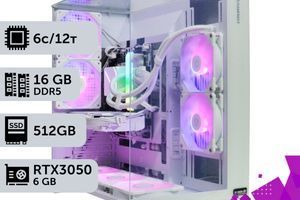
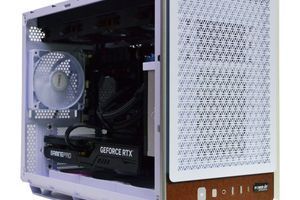
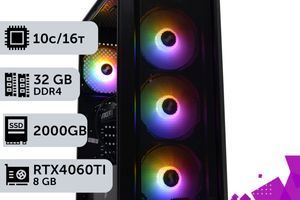
The era of the mindless megahertz race has come to an end. In 2026, Intel Core Ultra processors have become so complex and intelligent that their built-in boost algorithms work more effectively for gaming tasks than any manual intervention. Overclocking has become a domain for competitive overclockers, and for gamers, it has become an irrational waste of time and money that could be better invested in a more powerful graphics card or faster memory. Instead of risking stability and warranty for a phantom gain, focus on building a balanced system. Properly selected components, good case airflow, and smart BIOS tuning through undervolting and XMP profiles will bring much more benefit. If you want to get maximum performance without the hassle, we invite you to check out the PowerUp catalog of pre-built gaming PCs, where each build is already optimally configured by our engineers. And if you have special requests, our specialists are always ready to help assemble and configure the computer of your dreams.