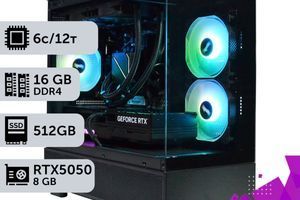
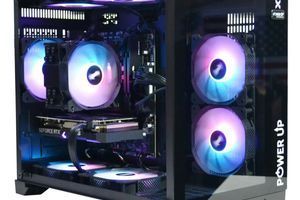
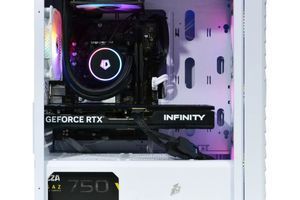
The RDNA 4 architecture provides a significant performance leap in rasterization, narrowing the gap with NVIDIA, but in ray tracing, the RTX 50 flagships are still ahead.
FSR 4.0 technology with the new Fluid Motion Frames has become much higher quality, almost catching up to DLSS 4 in image clarity in motion.
The RX 9000 series GPUs offer the best performance-per-UAH ratio in the mid-range segment (RX 9700 XT), making them an ideal choice for 2K gaming.
Power efficiency is a strong suit of RDNA 4. The cards consume on average 10-15% less power than similarly performing solutions from NVIDIA, which reduces the requirements for the PSU and cooling.
2026 has changed the rules of the game in the gaming PC market. With the release of monumental projects on Unreal Engine 5 and the widespread adoption of Path Tracing, the demands on the graphics subsystem have skyrocketed. Against this backdrop, AMD is rolling out its main trump card — the Radeon RX 9000 series based on the RDNA 4 architecture. This is not just another update, but a bid for leadership in a segment that has been dominated for years by NVIDIA with its GeForce RTX. The main question on every gamer's mind is: has AMD managed to offer something more than just an attractive price? Is the flagship RX 9900 XTX a real threat to the RTX 5080, or is it another story of "good performance for the money"? In this article, we will dissect the new architecture, examine real-world gaming tests, analyze FSR 4.0 and Fluid Motion Frames technologies, and finally, answer whether it's worth building your next gaming monster on the "red" side. We won't limit ourselves to dry numbers. We'll talk about future-proofing, how the new cards handle frame generation, and why the quiet operation of the cooling system in 2026 has become as important as raw FPS. Fasten your seatbelts, we are diving into the world of ultra-high resolutions, intelligent upscaling, and uncompromising gaming.
RDNA 4 Architecture: What's New Under the Hood?
At the core of the Radeon RX 9000 series is a radically redesigned RDNA 4 architecture. AMD has focused not on brute force, but on smart optimization. The key innovation is the transition to a chiplet design for top-tier models, similar to how it's implemented in Ryzen processors. The flagship RX 9900 XTX uses one main Graphics Compute Die (GCD) and several Memory Cache Dies (MCD), which allows for increasing the Infinity Cache size and bandwidth without a giant monolithic crystal. This solution reduces production costs and the defect rate. The manufacturing process has also advanced. The cards are produced on an improved 3nm TSMC process node, which has provided a 15-20% boost in clock speeds while maintaining or even lowering the TDP compared to the RX 8000 series. The second-generation AI Accelerators and Ray Tracing Accelerators have received significant improvements. AMD claims an 80% performance increase in machine learning operations, which directly affects the quality of FSR 4.0. The ray tracing accelerators now handle ray intersection (BVH traversal) better, which was a bottleneck in previous generations. However, as independent tests show, they still fall short of the 5th generation Tensor Cores in NVIDIA cards in terms of performance per watt in RT scenarios. To assess the stability of a system with the new cards, it is crucial to conduct a full system stress test using utilities like OCCT or AIDA64, especially if you are using a powerful Intel Core Ultra 9 285K processor, which itself is a significant load on the motherboard's power delivery subsystem. We recommend at least an hour of such testing to identify any potential issues with overheating or insufficient PSU power. This is particularly important for builds where every component is pushed to its limits to achieve maximum performance.
How Much DDR5 RAM is Needed for the RX 9000 in 2026?
With the release of new consoles and games on Unreal Engine 5, the question of RAM size and speed has become more critical than ever. While 16 GB was considered a sufficient minimum in 2023-2024, by 2026 it's a compromise that can lead to annoying loading stutters. For any GPU at the level of the RX 9700 XT and above, especially when paired with a high-performance processor, the de facto standard is 32 GB of DDR5 RAM. But it's not just the capacity that matters; speed and timings are also important. AMD EXPO technology allows for easy configuration of high-speed memory profiles. The optimal choice for systems based on Ryzen 9000 and RX 9000 cards is memory with a frequency of 6000-6400 MHz and timings of CL30 or CL32. A higher frequency, like 7200 MHz, provides a minimal performance increase in games (1-3%) but can cause stability issues with the processor's memory controller. This is especially true for an esports build, where stability is more important than peak, but rare, FPS values. For such builds, we recommend focusing on proven DDR5-6000 CL30 kits, which provide the perfect balance between performance and reliability. For 4K gaming and content creation, you can already consider 48 GB or even 64 GB, as modern games, especially with HD textures, can easily reserve 20-24 GB of RAM for their needs, and having a surplus allows the system to run smoother without offloading data to the slow page file on the SSD. Remember that skimping on RAM today could become your system's bottleneck tomorrow, limiting the potential of a powerful graphics card.
Strengths and Weaknesses of the AMD RX 9000 Series
Advantages
✔Excellent price-to-performance ratio in the mid-range segment, especially the RX 9700 XT model.
✔High power efficiency thanks to the new process node, resulting in less heat and noise.
✔Support for DisplayPort 2.1 with UHBR 20 bandwidth, which is a future-proof feature for 4K monitors with 240+ Hz refresh rates.
✔Open standard FSR 4.0, which works on GPUs from different manufacturers and previous generations.
Disadvantages
✖Lagging behind top NVIDIA cards in tasks with intensive Path Tracing.
✖The ecosystem of drivers and accompanying software (e.g., for streaming) is still perceived as less stable compared to NVIDIA Experience.
✖Less popular in professional tasks (3D modeling, AI), which reduces the card's resale value.
Ray Tracing and Future-Proofing: Is It Worth Paying Extra for Path Tracing?
Ray Tracing technology has come a long way from "pretty reflections" to full-fledged Path Tracing, as seen in Alan Wake 2 or Cyberpunk 2077. Path Tracing simulates the physically correct behavior of light in a scene, creating incredibly realistic global illumination, shadows, and reflections. But the price for such beauty is a colossal load on the GPU. This is where the main architectural difference between AMD and NVIDIA becomes apparent. The RTX 50-series cards, thanks to specialized units for working with BVH structures and more mature drivers, perform significantly better in such tasks. On average, the RTX 5080 outperforms the RX 9900 XTX in Path Tracing modes by 20-30%. Does this mean AMD cards are bad for RT? Not at all. In games with a classic implementation of ray tracing (shadows, reflections, ambient occlusion), the difference shrinks to 5-10%, and sometimes it's non-existent. If you don't plan to play exclusively titles with the most advanced graphics and Path Tracing enabled, the performance of the RX 9000 will be more than enough for you. The choice depends on your priorities. Are you willing to pay a premium for best-in-class RT performance, or do you prefer to save money and get 90% of the visual experience for less? The motherboard also plays an important role. To unlock the potential of a powerful CPU and GPU combination, you need a board based on the X770 (for AMD) or Z890 (for Intel) chipset with a high-quality power delivery system (VRM) and support for PCIe 5.0 for both the graphics card and the NVMe drive. Skimping on the motherboard can lead to VRM overheating and CPU throttling, which will negate all the advantages of your top-tier graphics card.
Choosing Power and Cooling: How to Avoid Overpaying and Maintain Silence
Despite improved power efficiency, the top-tier RX 9000 cards remain demanding on power. The flagship RX 9900 XTX can consume up to 450W at its peak, and the second-to-top RX 9800 XT around 380W. This means that for stable system operation, a high-quality power supply unit with a certificate of at least 80 Plus Gold is necessary. Don't chase maximum wattage; the quality of the component base and voltage stability are more important. For a build with an RX 9800 XT and a Ryzen 7 9700X level processor, we recommend an 850W power supply. This will be more than enough, and the PSU will operate in its most efficient range of 50-70% load. For an RX 9900 XTX paired with a Core Ultra 9 285K, you should look at 1000-1200W models, especially if you plan to overclock. The right balance of components is key to stability. A cheap PSU can not only provide unstable voltage, leading to crashes, but also be a source of significant noise due to a low-quality fan. As for cooling, most non-reference RX 9000 models from partners (ASUS, Sapphire, PowerColor) are equipped with massive triple-slot cooling systems with three fans. They do their job perfectly but require a spacious case with good airflow. Minimum case requirements:
Support for graphics cards up to 350 mm in length.
At least two 140mm intake fans at the front.
One 120mm or 140mm exhaust fan at the rear.
Sufficient space behind the motherboard tray for cable management.
This configuration will create proper airflow that will efficiently dissipate heat not only from the graphics card but also from other hot components like the motherboard's VRM and the SSD.
How to Achieve Perfect Smoothness: Real-World Tests and Temperatures
Raw teraflops mean nothing without real-world gaming tests. We tested the second-to-top model, the AMD Radeon RX 9800 XT, paired with an AMD Ryzen 7 9700X processor and 32 GB of DDR5-6400 memory. The goal was not just to squeeze out maximum FPS, but to achieve a stable framerate without stutters and drops. All tests were conducted in a case with well-configured airflow, where proper cable management did not obstruct air circulation. The ambient room temperature was 22°C.
Average FPS in popular games of 2026 (Ultra Settings, FSR/DLSS Quality)
Game
1440p Resolution
4K Resolution
Cyberpunk 2077 (Phantom Liberty) with Path Tracing
~85 FPS
~55 FPS
Grand Theft Auto VI
~110 FPS
~70 FPS
Counter-Strike 2 (at max settings)
~450 FPS
~280 FPS
As you can see from the table, the card handles 2K resolution perfectly, delivering over 100 FPS in the most demanding titles. Performance at 4K is also at a high level, although in games with path tracing, you have to rely on frame generation for a comfortable experience. As for temperatures, RDNA 4 is a pleasant surprise. In a closed case under maximum load in FurMark, the GPU temperature did not exceed 78°C, and the hottest point (Hot Spot) was 92°C. At the same time, the fan speed was only 60% (about 1600 RPM), making the system very quiet. This is a key advantage for those who play at night and don't want to wake up the whole family with the sound of a turbine. For comparison, a reference RTX 5070 Ti under the same conditions heated up to 82°C, and its fans spun up to 1900 RPM. This result makes builds based on AMD RX 9000 an excellent choice for silence enthusiasts.
Building the Perfect Custom PC: Synergy of RX 9000 with Other Components
The graphics card is the heart of a gaming PC, but it won't beat at full strength without properly chosen organs. When creating a custom PC based on the Radeon RX 9000, it's important to achieve synergy among all components. Let's start with the storage. In 2026, the only sensible choice for the system drive and game installation is an NVMe SSD with a PCIe 5.0 interface. Microsoft's DirectStorage technology, which is actively used in new games, allows the graphics card to load data directly from the SSD, bypassing the CPU. This dramatically reduces loading times and eliminates on-the-fly texture streaming issues. A PCIe 5.0 drive with a read speed of 12,000 MB/s or higher will fully unlock this technology, while older PCIe 4.0 drives (around 7,000 MB/s) can already become a bottleneck. Capacity? 2 TB is the new comfortable minimum. GTA VI alone could take up 250-300 GB. The processor is another critically important element. For cards like the RX 9700 XT and RX 9800 XT, an ideal pairing would be the 8-core AMD Ryzen 7 9700X or Intel Core Ultra 7 265K. They provide enough performance to not be a bottleneck for the GPU at 2K and 4K resolutions. For the flagship RX 9900 XTX, it's better to get something more powerful, like the Ryzen 9 9900X, especially if you plan to play at high frame rates or stream. It's important to understand that even the most powerful graphics card can't show its full potential if the processor is constantly at 100% load and can't prepare frames for it in time. According to independent tests from Tom's Hardware, the difference in FPS between a mid-range and a top-tier processor paired with a flagship card can be as high as 20-25% at 1080p and around 10-15% at 1440p.
FSR 4.0 vs. DLSS 4: Who Wins the Upscaling Race?
The battle of intelligent scaling technologies reached its peak in 2026. AMD introduced FidelityFX Super Resolution 4.0, and it's a huge step forward. The main improvement is the new version of frame generation, Fluid Motion Frames (FMF), which now uses the hardware AI accelerators of RDNA 4 to analyze motion vectors and frame geometry. This has significantly reduced artifacts and input lag, which was the main problem of previous versions. The image quality in FSR 4.0's "Quality" mode at 4K resolution has become almost indistinguishable from native, especially in static scenes. However, in very dynamic shooters, NVIDIA's DLSS 4 technology, thanks to more mature algorithms and powerful Tensor Cores in the GeForce RTX 50-series GPUs, still demonstrates a slightly more stable and clear picture, especially on fine details and interface elements. Here is a brief comparison of the technologies:
Image Quality: DLSS 4 has a slight advantage in the clarity of moving objects. FSR 4.0 has almost caught up, but can sometimes blur textures at sharp angles.
Performance: The FPS boost from FSR 4.0 and DLSS 4 is comparable, averaging from 70% to 120% depending on the game and resolution.
Input Lag: Both technologies use their own equivalents of Reflex/Anti-Lag to minimize latency, and for most players, the difference will be unnoticeable.
Compatibility: FSR 4.0 remains an open standard and works on a wide range of GPUs, including older models and even competitor's cards. DLSS 4 is exclusive to RTX cards.
For a gamer planning a PC upgrade, the choice between these technologies becomes less obvious. If you are not an esports athlete for whom every millisecond and perfect image clarity matters, FSR 4.0 will offer you an amazing experience and a huge performance boost. This makes the RX 9000 cards even more attractive to the mainstream gamer.
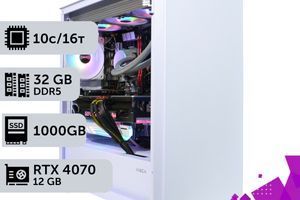
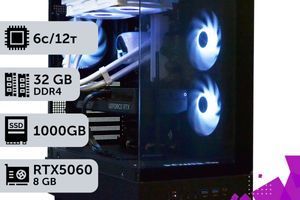
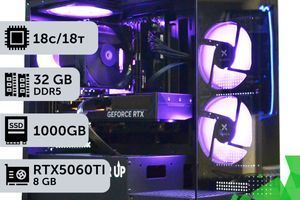
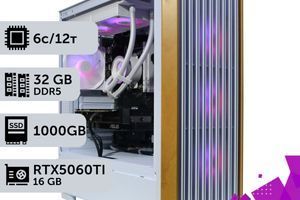
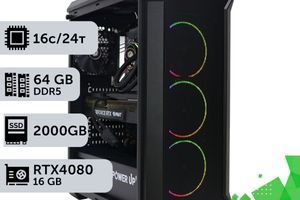
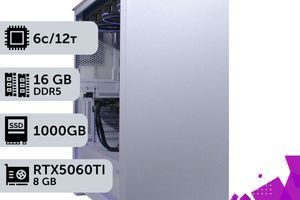
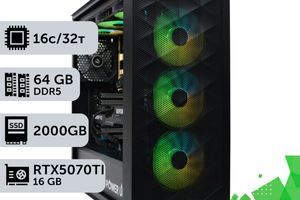
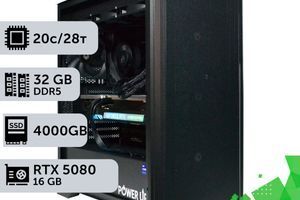
Comparative table of builds for different resolutions in 2026
How to Build a Balanced PC with an AMD RX 9000 Graphics Card
This guide will help you avoid common mistakes during a self-build and select components that perfectly complement your new AMD graphics card, ensuring maximum performance and stability.
Step 1: Choosing an RX 9000 model for your resolution
Decide on your primary monitor. For 1080p@240Hz or 1440p@144Hz, the ideal choice is the RX 9700 XT — it's the champion of price-to-performance. If your goal is uncompromising 4K gaming at 120+ Hz, look towards the RX 9900 XTX. Don't buy a flagship card for a Full HD monitor; you'll just be overpaying for excess power that will go unused.
Step 2: Pairing a compatible CPU and motherboard
To avoid bottlenecking, choose a CPU that matches the GPU's tier. For the RX 9700 XT, a Ryzen 7 9700X or Core Ultra 7 265K is sufficient. For the RX 9900 XTX, you need a flagship Ryzen 9 9900X or Core Ultra 9 285K. Choose a motherboard on an AMD X770 or Intel Z890 chipset with PCIe 5.0 support and a good VRM power delivery system (at least 16+2 phases).
Step 3: Selecting RAM and storage
The standard for 2026 is 32 GB of DDR5. The optimal frequency for AMD platforms is 6000-6400 MHz with CL30 timings. For the system drive and games, use an NVMe SSD with a PCIe 5.0 interface and a capacity of at least 2 TB to take full advantage of DirectStorage technology.
Step 4: Calculating PSU wattage and choosing a case
Add the TDP of the GPU and CPU, add 100W for other components, and multiply by 1.5 to get the recommended PSU wattage with some headroom. For a system with an RX 9800 XT (380W) and a Ryzen 7 9700X (120W), you would need a PSU of (380+120+100)*1.5 ≈ 900W. Choose an 850-1000W model with an 80+ Gold certificate. The case should be spacious (Mid-Tower or Full-Tower) with a mesh front panel for maximum air intake.
Step 5: Assembly and setup
During assembly, pay special attention to cable management to avoid obstructing airflow. After installing Windows, be sure to install the latest version of the AMD Adrenalin driver. Enable the EXPO profile for your RAM in the BIOS and activate Smart Access Memory (Resizable BAR). Run stress tests on the CPU and GPU to ensure system stability under load.
Frequently Asked Questions (FAQ)
Do I need to change my power supply to upgrade to an RX 9000?
It depends on your current model. If you have a quality 750-850W power supply with an 80+ Gold certificate, it might be sufficient for models up to the RX 9700 XT. For the RX 9800 XT and above, a PSU of 850W or more is recommended, and for the flagship RX 9900 XTX, 1000W is advised. Make sure your PSU has the necessary 12V-2x6 power connectors.
How loud are the RX 9000 cards under load?
Thanks to the new process node and massive cooling systems from partners, the RX 9000 series cards are surprisingly quiet. In a well-ventilated case, most models do not exceed a noise level of 40-42 dB under maximum gaming load, which is a very comfortable figure.
Would the AMD Ryzen 7 7800X3D be a good choice for the RX 9900 XTX?
The Ryzen 7 7800X3D is still an excellent gaming processor in 2026. However, for the flagship RX 9900 XTX, it might become a slight bottleneck at 1080p and 1440p resolutions in games that are heavily CPU-dependent. For a perfect balance, it's better to choose a processor from the new Ryzen 9000 series, such as the Ryzen 7 9700X or Ryzen 9 9900X.
What is Smart Access Memory and should I enable it?
Smart Access Memory (or Resizable BAR) is a technology that allows the CPU to get full access to the entire VRAM, instead of operating with small chunks. Enabling this feature in the BIOS can provide a performance boost of 5% to 15% in some games. It is definitely recommended to activate it on all modern platforms.
Can I use FSR 4.0 on my older graphics card, like an RX 6800 XT?
Yes, this is one of the main advantages of AMD's technology. The base FSR 4.0 upscaling will work on a wide range of GPUs, including older AMD generations and even NVIDIA cards. However, the new Fluid Motion Frames feature, which requires AI accelerators, will be exclusive to the RDNA 4 architecture (RX 9000 series) to achieve the best quality and lowest latency.
The AMD Radeon RX 9000 series of graphics cards is a powerful and confident step forward. AMD has not only closed the gap with its competitor but has also pulled ahead in some aspects, such as power efficiency and price in the mid-range segment. RDNA 4 cards offer gamers stunning performance in rasterization, a mature FSR 4.0 upscaling technology, and excellent future-proofing thanks to DisplayPort 2.1 support. Yes, in uncompromising path tracing, NVIDIA's flagships still hold the crown. But for the vast majority of gamers looking for the optimal balance of price, performance, and technology, AMD's solutions in 2026 look more attractive than ever. If you're ready to build a machine for 2K or 4K gaming that will delight you with its silence and stability, the RX 9000 is your choice. We invite you to the PowerUp catalog, where you can find pre-built gaming computers based on the latest graphics cards or consult our engineers to create a unique build for your specific needs.