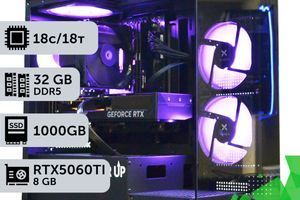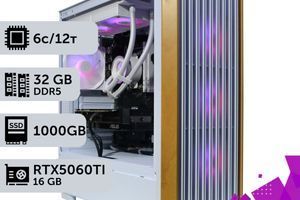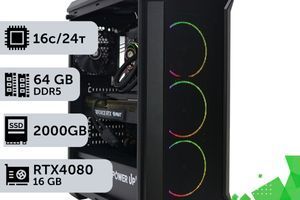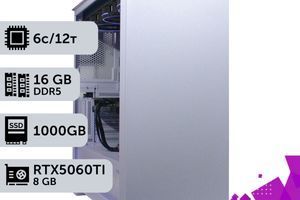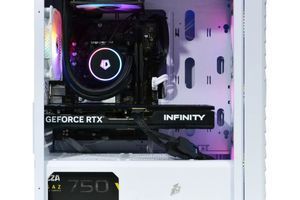
The RTX 5060 Ti graphics card comes in two versions: with 8 GB and 16 GB of memory. The latter even surpasses the next-generation RTX 5070. Below, we ran Nvidia GPU tests to determine whether it is worth paying extra for the larger memory capacity.

General information
The GeForce RTX 5060 Ti is more affordable than its predecessor and offers 6% more core blocks. The number of ROPs (render output units) remains unchanged, as does the cache size, but PCIe has now been upgraded to version 5. The GeForce RTX 5070 costs 28–45% more than the 5060 Ti, due to having one-third more cores and two-thirds more ROPs. The L2 cache is increased by 150%, while the memory bus is 50% wider. All PCIe lanes are fully available.
Performance in applications
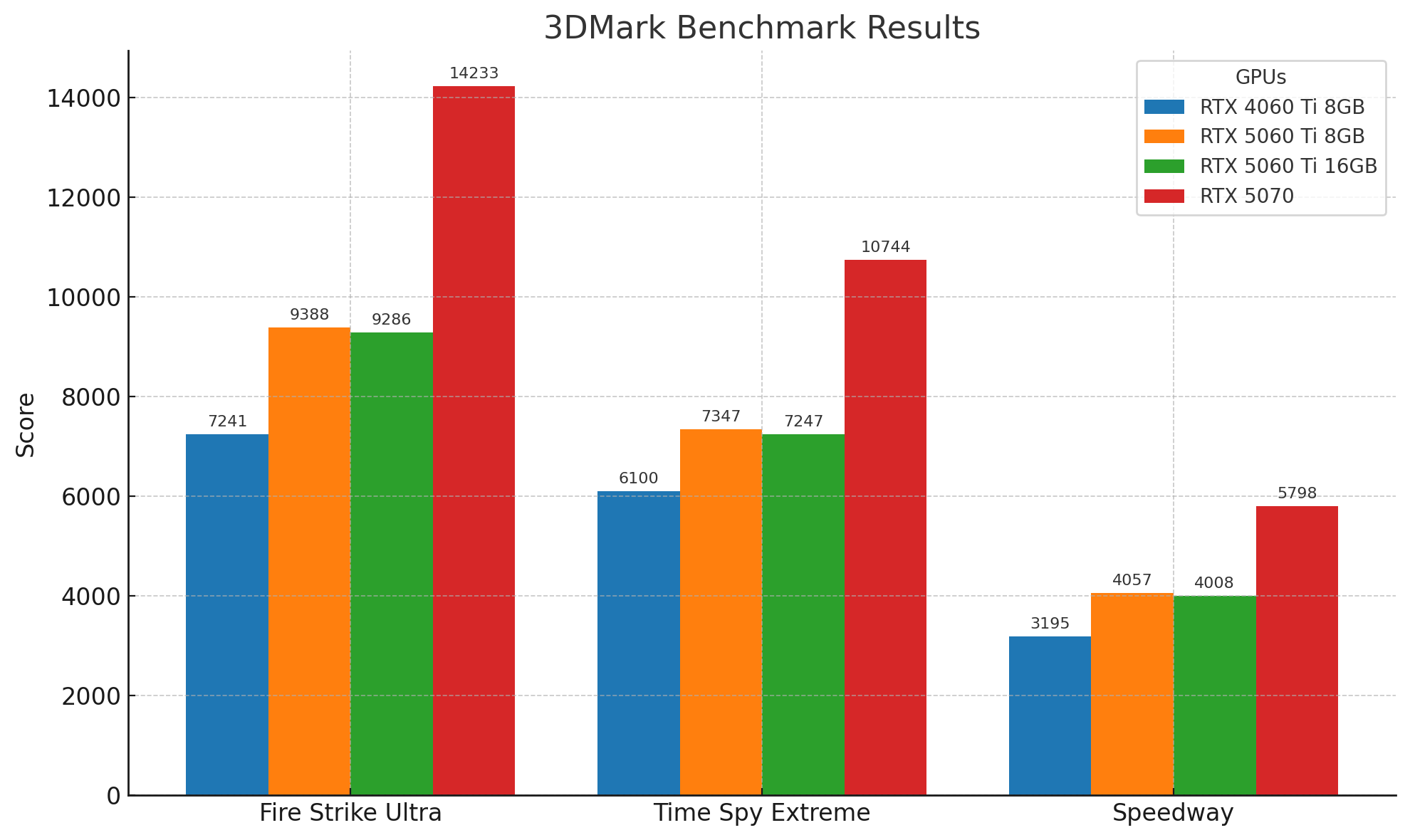
In 3DMark Fire Strike Ultra, the 5070 delivers 1.5× higher performance compared to the 5060 Ti. Interestingly, the 8 GB version shows a slight advantage over the 16 GB one, which can be explained by a higher core frequency.
In Blender, the 5070 is also 1.5× faster. However, this generational performance gain cannot be called impressive — rather modest.

In the V-Ray rendering software, the 5060 Ti shows 33% better performance than the GeForce RTX 4060 Ti, while the 5070 is 50% faster in the RTX test and 58% faster with CUDA.

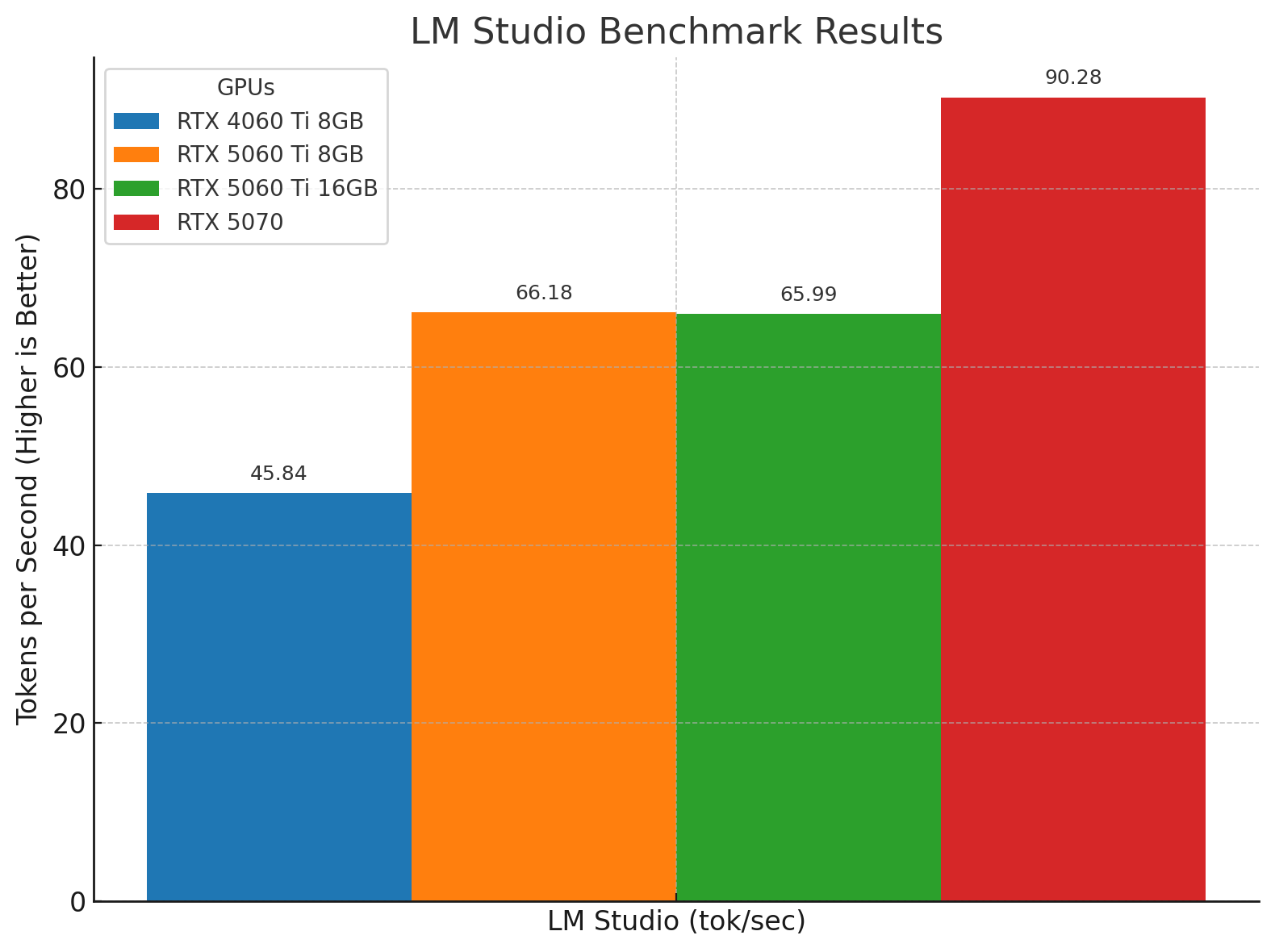
In LM Studio, used to run OpenAI’s LLM models locally, the 5070 performs 37% better than its predecessor, which itself is 44% faster than the 4060. The difference between the 8 GB and 16 GB versions of the 5060 is negligible with smaller models, but becomes noticeable with larger ones.
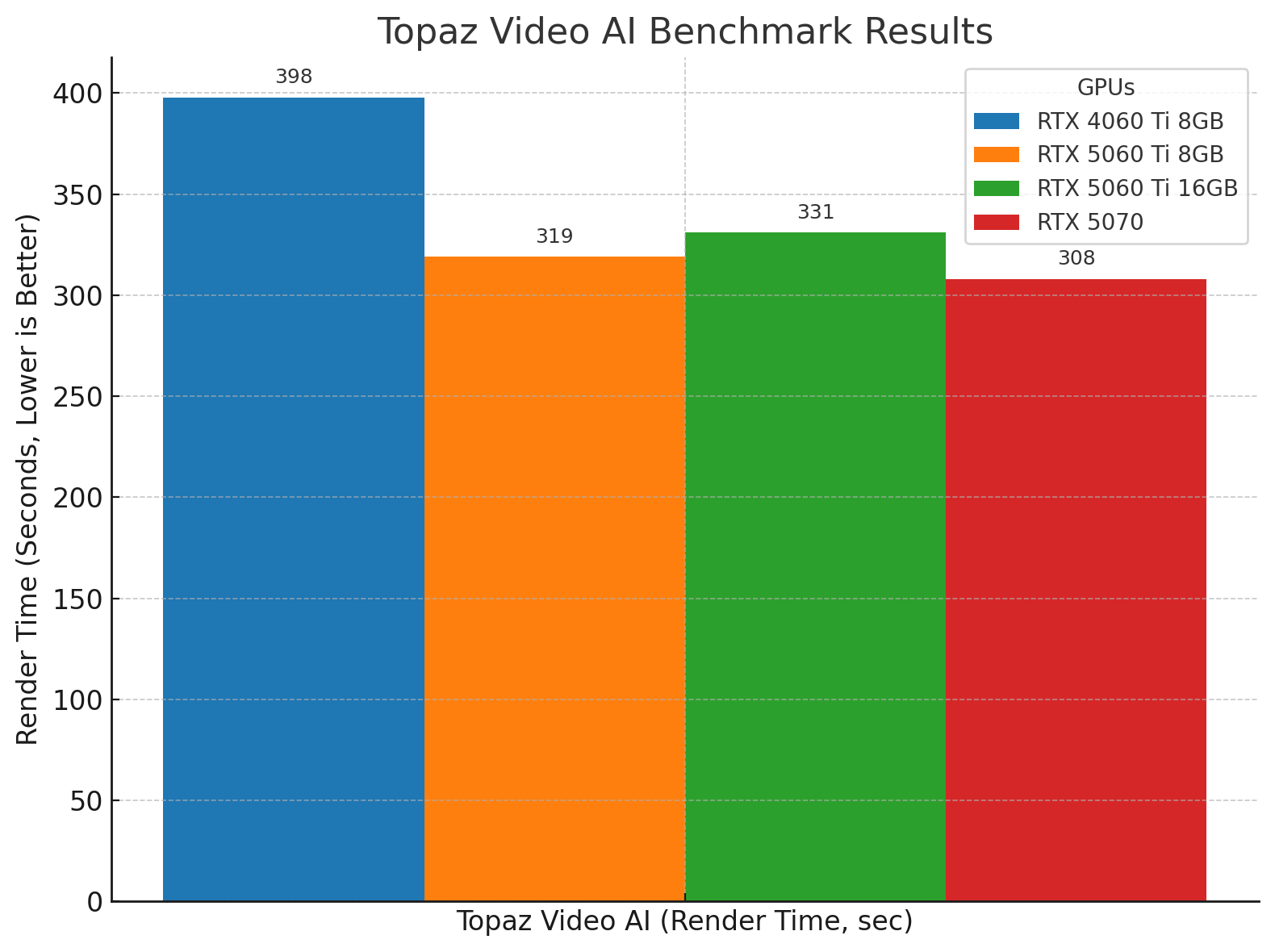
In Topaz Video, used for AI-based video enhancement, the performance difference between the 5060 and 5070 is minor, while the 4060 is on average 24% slower. Purely by numbers, the 5070 leads, outperforming the 5060 8 GB by 4% and the 5060 16 GB by 7%.
In Photoshop testing, the generational gap is especially evident in intelligent noise reduction tasks, expressed in faster result delivery. The difference between each generation is around 30%.

In Davinci Resolve, used for nonlinear video, audio, and post-production editing, the H.265 codec remains demanding, with all GPUs performing similarly. Differences become clear with the H.264 codec, where the 5070 is 9% faster than the 5060, and 35% better than the 4060. With AV1, the 5070 is slightly ahead of the 5060 16 GB, matches the 5060 8 GB, and is 23% faster than the 4060.

In Adobe Premiere Pro, performance differences between generations are very clear: 51% (4060 → 5060) and 47% (5060 → 5070). The memory size of the 5060 plays almost no role. These results hold regardless of whether H.264 or H.265 codecs are used.
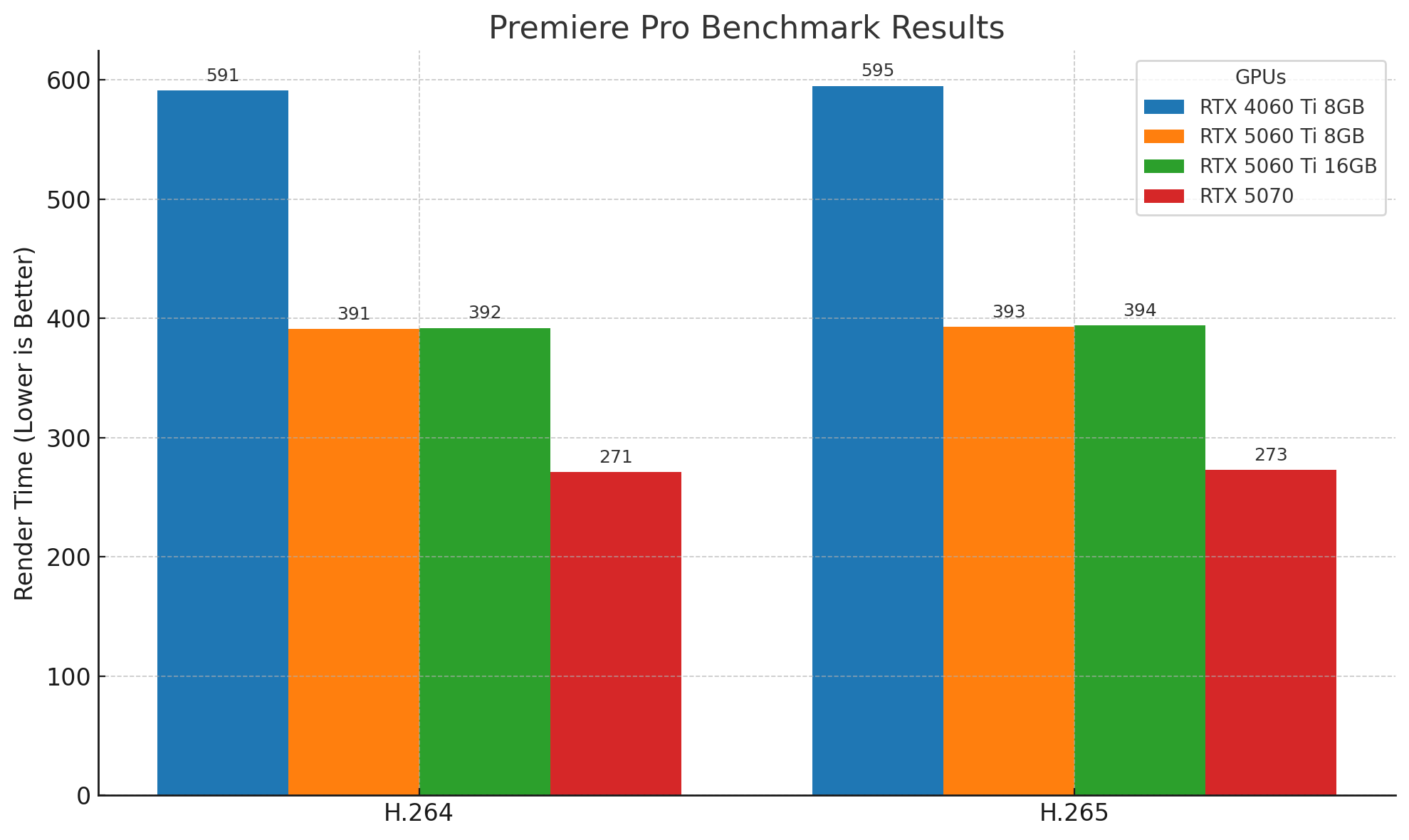
OBS Studio, software for recording and live streaming, shows performance gains only when moving up from the 4060. There is no observable difference between the 5060 and 5070 across different codec choices.

Power consumption
As for power consumption, all cards performed efficiently. Even when playing 4K YouTube streams, the fans remained in passive mode, not spinning up actively.
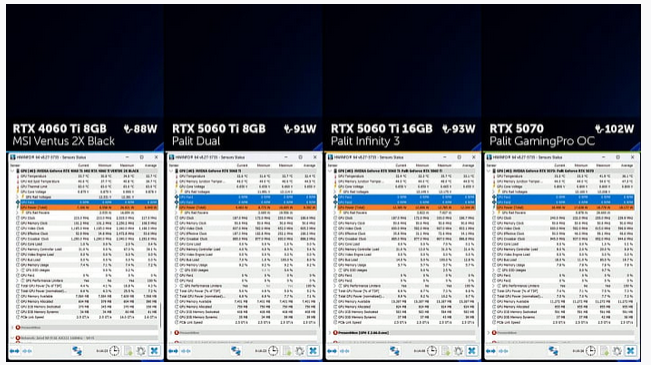
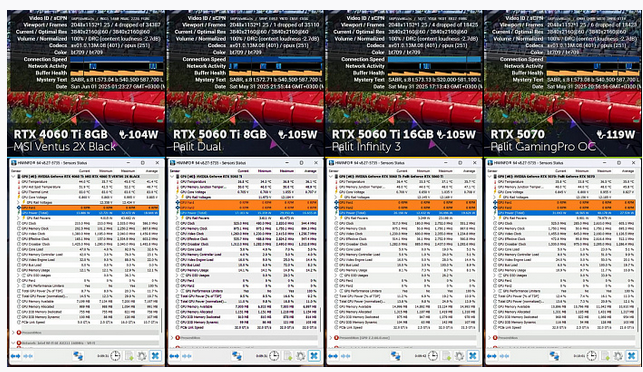
During stress testing, the power limit matched the rated specifications. Notably, the Palit Infinity 3 offers better cooling compared to the Palit Dual, keeping the GPU 7 °C cooler and the memory 4 °C cooler. At the same time, the Infinity 3 is more power-efficient, as its fans spin 400 RPM slower than those of the Palit Dual.